

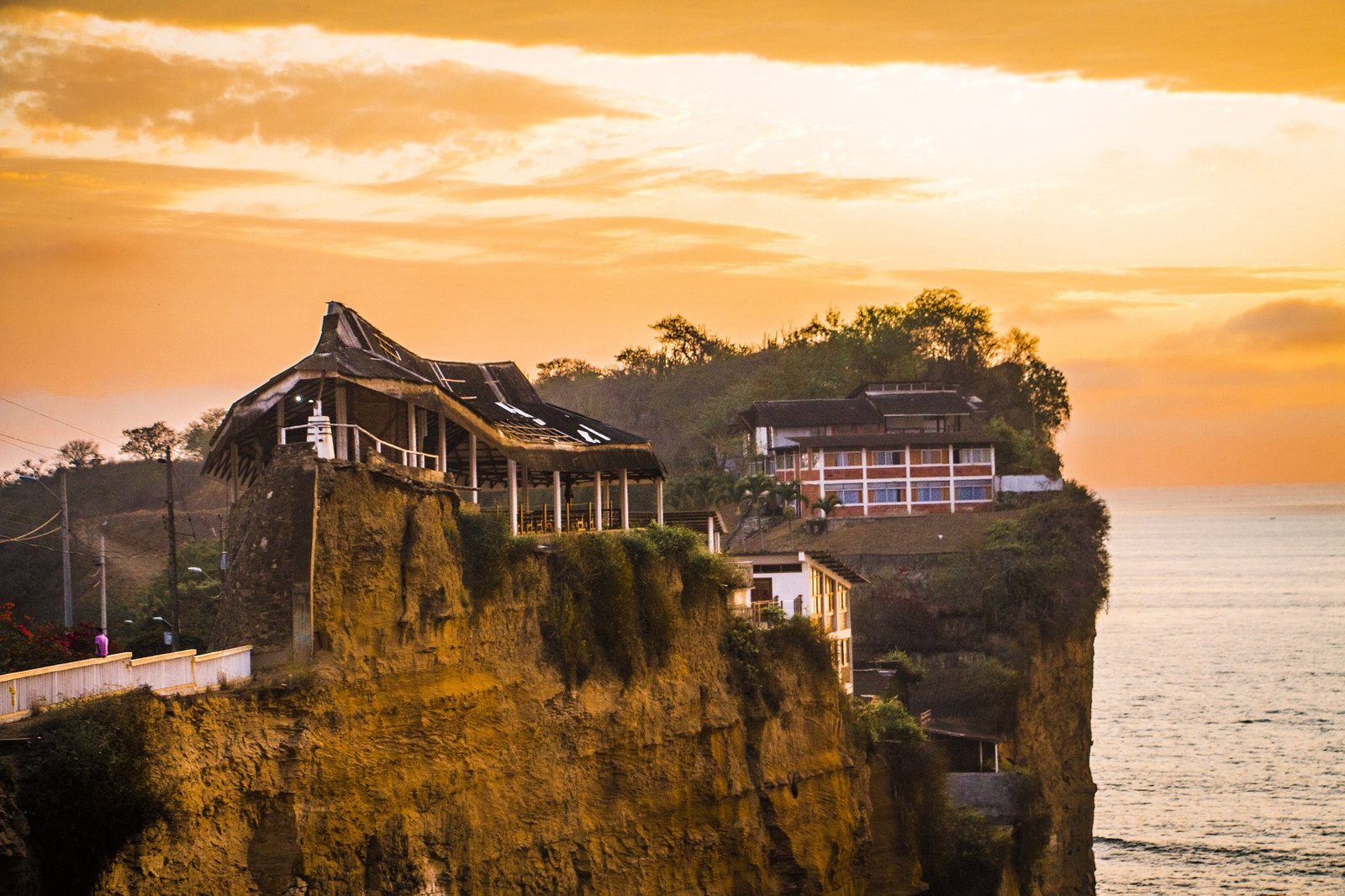
On a map of the Ruta del Spondylus, Montañita, Olón and Ayampe look like three beads on the same string. Same Pacific, same dollar, same ceviche, same buses rattling past in both directions. Spend a week in each, though, and you’ll notice they run at completely different speeds. One is a party with a surf problem. One is a malecón that goes to bed at nine. One barely has a cash machine within half an hour, and its residents like it that way.
If you’re dreaming about a slow coastal life in Ecuador, the real question isn’t “which town is best?” It’s “how slow do you actually want to go?”
Montañita: slow mornings, loud nights
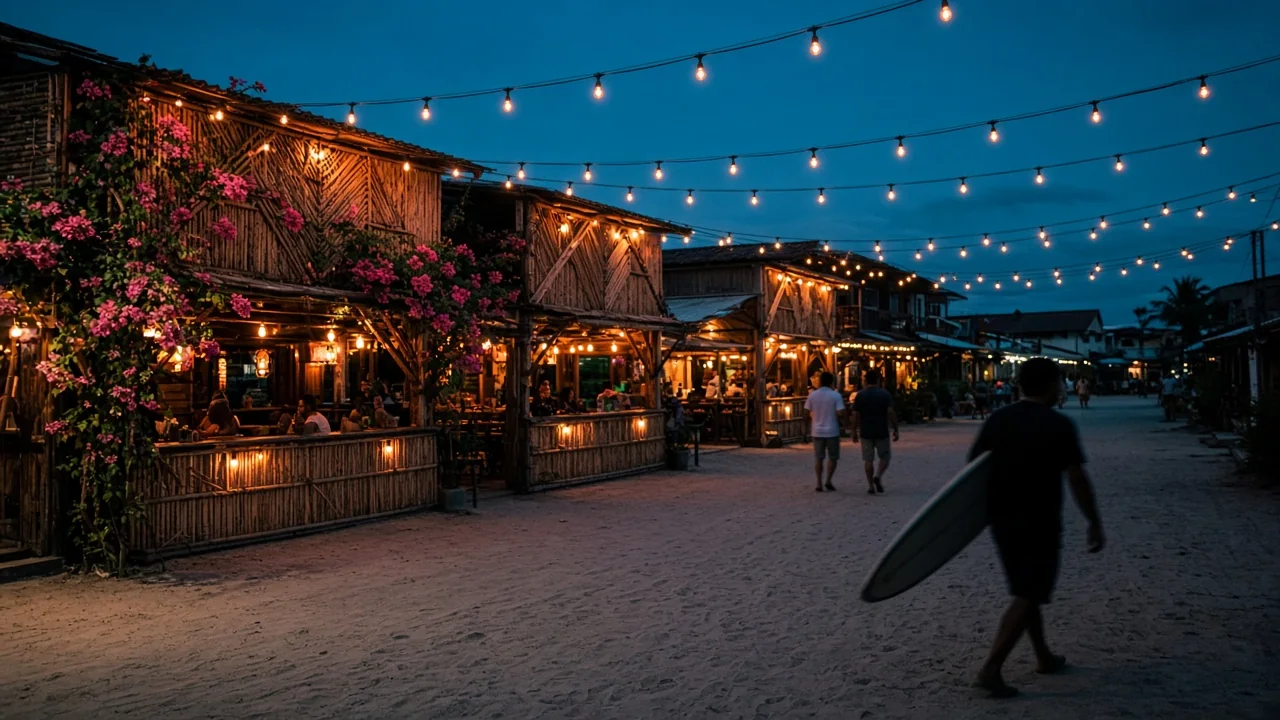
Let’s get the famous one out of the way. Montañita is Ecuador’s surf-and-party capital, and it doesn’t apologize for it. The point break draws surfers year-round, the main strip is a maze of bamboo bars and cocktail stands, and on weekends and holidays the town fills up with backpackers and Guayaquileños escaping the city.
So why is it on a slow-life list? Because the people who last here have learned to live around the noise. Work and surf in the mornings, go out two nights a week on your own terms, and sleep on the quieter edges of town. In exchange, Montañita gives you the coast’s best infrastructure for remote work, the most restaurants, yoga in every flavor and a community of long-timers who’ve watched the town grow up.
The numbers: expat guides put a shared room at roughly $280–400 a month and a private furnished apartment at $400–600, with all-in solo budgets of around $1,500–1,800. Prices jump in high season and on holiday weekends.
Best for: social creatures, digital nomads who need dependable bandwidth, and anyone who wants their slow life to come with a soundtrack.
Olón: the malecón that goes to bed early
Ten minutes north, Olón feels like Montañita’s grown-up sibling who took up birdwatching. It has the same long, swimmable beach without the high-rises or the party, a malecón lined with seafood restaurants and smoothie stands, and the white Santuario de Olón watching from the cliff. The hills behind town are green, part of the Chongón-Colonche coastal range, with dry forest and misty garúa forest higher up that you don’t expect this close to the sand.
By nine at night, Olón is mostly asleep. The expat crowd skews older and more settled: retirees, couples who tried the highlands and moved to the sea, families, and remote workers who need quiet more than a coworking space. When you miss the noise, Montañita is a cheap bus ride away. Then you come home to the sound of waves instead of reggaetón.
The numbers: a one-bedroom near the beach runs about $400–600, and two-bedroom beachfront places run around $550–800. Guides estimate about $1,500–1,600 a month for a single person and $1,600–2,000 for a couple. Landlords often negotiate on six-month leases: one guide’s example is a $700 asking price settling at $550–600.
Watch out for: limited formal coworking. Locals rely on home fiber plus a 4G backup, and cash still rules in small shops.
Best for: couples, retirees and anyone whose idea of nightlife is a sunset and a second glass of wine.
Ayampe: subtract, don’t add
Keep going north from Montañita, past Las Tunas, and after roughly half an hour to 40 minutes you reach Ayampe. It sits just over the provincial line in Manabí, about 17 km south of Puerto López, in a small village where the Río Ayampe meets the ocean, wrapped in green hills. There’s a famous wave out front, plus yoga retreats, eco-lodges built from bamboo and thatch, and a river trail through the forest. It’s also the setting of one of our most-read reader stories, which tells you something about the atmosphere.
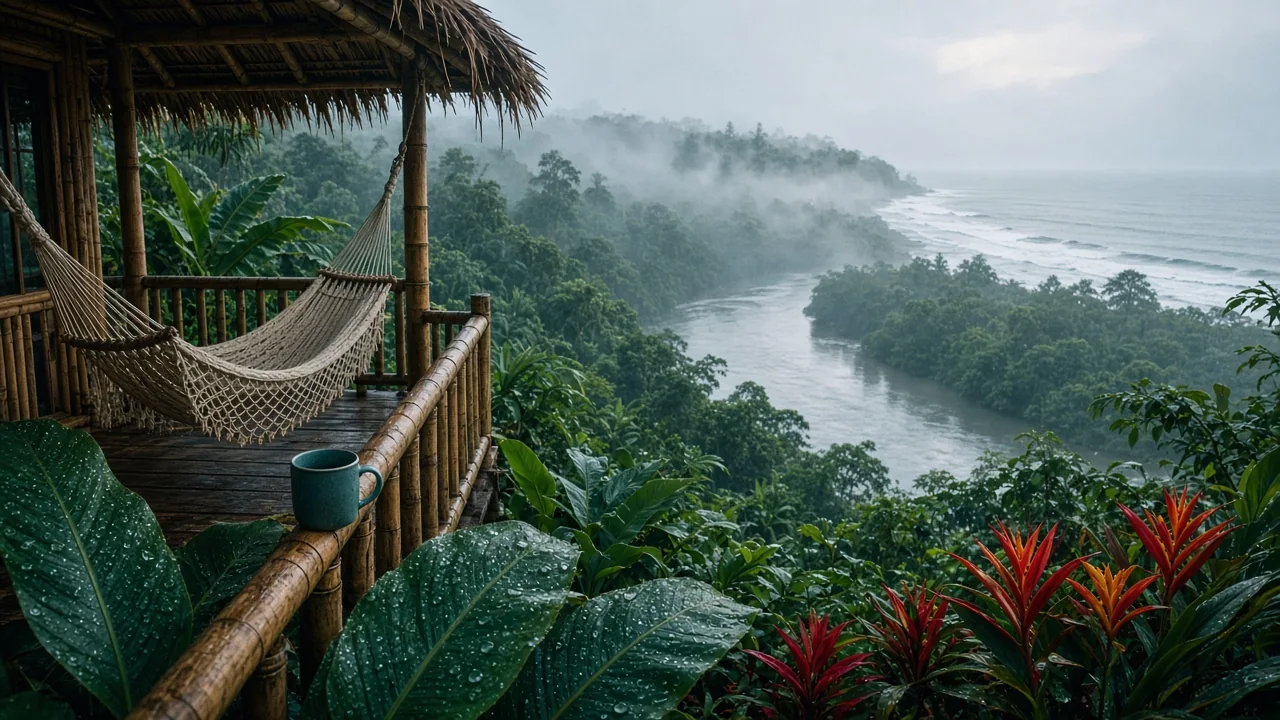
Ayampe is for people who want to take things away from their life, not add more. There’s no ATM; the nearest are in Puerto López or Montañita, and a taxi there costs around $15–20 each way. Internet can be patchy. Stores are tiny. The power sometimes goes out. Residents talk about these things the way other people talk about features.
The numbers: a room in a guesthouse or a simple local rental costs about $300–500, and total monthly budgets of $800–1,200 are realistic if you live simply.
Watch out for: cash logistics, as most people do a cash run once or twice a month. Healthcare and big supermarkets are a drive away, so check where your nearest clinic is before you sign anything.
Best for: surfers, yogis, writers and anyone ready to live by the tides rather than the calendar.
The practical stuff nobody puts on Instagram
Seasons. The coast has two moods. From roughly December to May it’s hot, sunny and humid, with afternoon downpours. From about June to November the garúa season brings grey skies, cooler temperatures and, from roughly June to September, humpback whales off Puerto López. Visit in both before you commit.
Healthcare. For anything serious, you’ll be heading to bigger towns or to Guayaquil, about three hours from Montañita. Check where the nearest clinic and hospital are before you sign a lease.
Safety. Be honest with yourself here. The U.S. State Department’s advisory, last updated in August 2026, rates Ecuador as a whole at Level 2, “Exercise increased caution,” but puts Santa Elena and Manabí, the provinces these three towns sit in, at Level 3, “Reconsider travel.” Residents and expat guides say daily life in these small towns is generally calmer than a provincial rating suggests, but read your own country’s advisory, ask long-term residents, avoid flashing valuables and don’t walk empty beaches alone at night.
Leases. Rent month to month first. Every expat guide says it, and every expat who skipped this step wishes they hadn’t.
Visas. Our guide to where to retire in Ecuador covers the pension visa basics. Our 2026 cost-of-living breakdown shows how coastal life compares with Cuenca.
The slow-life test
Here’s a quick way to choose. Imagine it’s 8 p.m. on a Tuesday.
- If you want music and a new friend, choose Montañita.
- If you want dinner on the malecón and to be in bed by ten, choose Olón.
- If you want a candle, a book and the river running under the frogs, choose Ayampe.
The good news is that you don’t have to choose forever. They’re all on the same road. Plenty of people start in Montañita, move to Olón, and spend their weekends in Ayampe pretending they’ll stay just one more week.
Sources
- Vidala, ‘Living in Olón, Ecuador: Quiet Beach Expat Guide 2026’: https://vidala.co/guides/olon-ecuador-expat-guide/
- Vidala, ‘Ayampe, Ecuador: Expat Guide to Surf & Village Life 2026’: https://vidala.co/guides/ayampe-ecuador-expat-guide/
- Vidala, ‘Living in Montañita, Ecuador: Expat & Nomad Guide 2026’: https://vidala.co/guides/montanita-ecuador-expat-guide/
- International Living, ‘Best Beach Towns in Ecuador for Expats in 2026’: https://internationalliving.com/beach-towns-in-ecuador-which-is-best-for-you/
- Genki, ‘Ecuador for digital nomads: cities, costs, visa & safety’: https://guide.genki.world/ecuador/
- U.S. Department of State, Ecuador Travel Advisory (issued 18 August 2026): https://travel.state.gov/content/travel/en/traveladvisories/traveladvisories/ecuador-travel-advisory.html
- Beach Life Ecuador, ‘Playa de Ayampe (Manabí)’ (location): https://beachlifeecuador.com/ayampe/
- Turismo Santa Elena, ‘Olón: bosque’ (forest in the Chongón-Colonche range): https://www.turismosantaelena.com/olon/bosque.php
- Cover photo: Photo: Miguel Murillo, via Wikimedia Commons, CC BY 3.0 (licence)