
Somewhere between your third sunset in Montañita and your second hostel conversation in Quito, someone will tell you weed is “basically legal” in Ecuador. They’ll say it with total confidence. They’ll also be wrong, or about three years out of date.
Ecuador’s cannabis story in 2026 has had more plot twists than a telenovela: a citizens’ bill that got through the front door of the National Assembly, a signature count that fell short, a court challenge, and a legal grey zone that has been quietly widening since 2023. If you live here or you’re passing through, this is the version without the hostel mythology.
Quick housekeeping first: Mood Chillin doesn’t sell cannabis, and we’re not going to tell you where to find it. This is a culture-and-law piece, not legal advice.
The bill that almost made it
On 7 April 2026 the National Assembly voted, with 142 votes in favor, to accept a citizens’ initiative, the Ley Orgánica para la Regulación Integral del Uso Responsable de Cannabis. It was filed on behalf of Redcan, a network of cannabis organizations and individuals that includes growers, activists and medical users. That vote was procedural. It confirmed that the paperwork met the legal requirements, and the next step was proving public support.
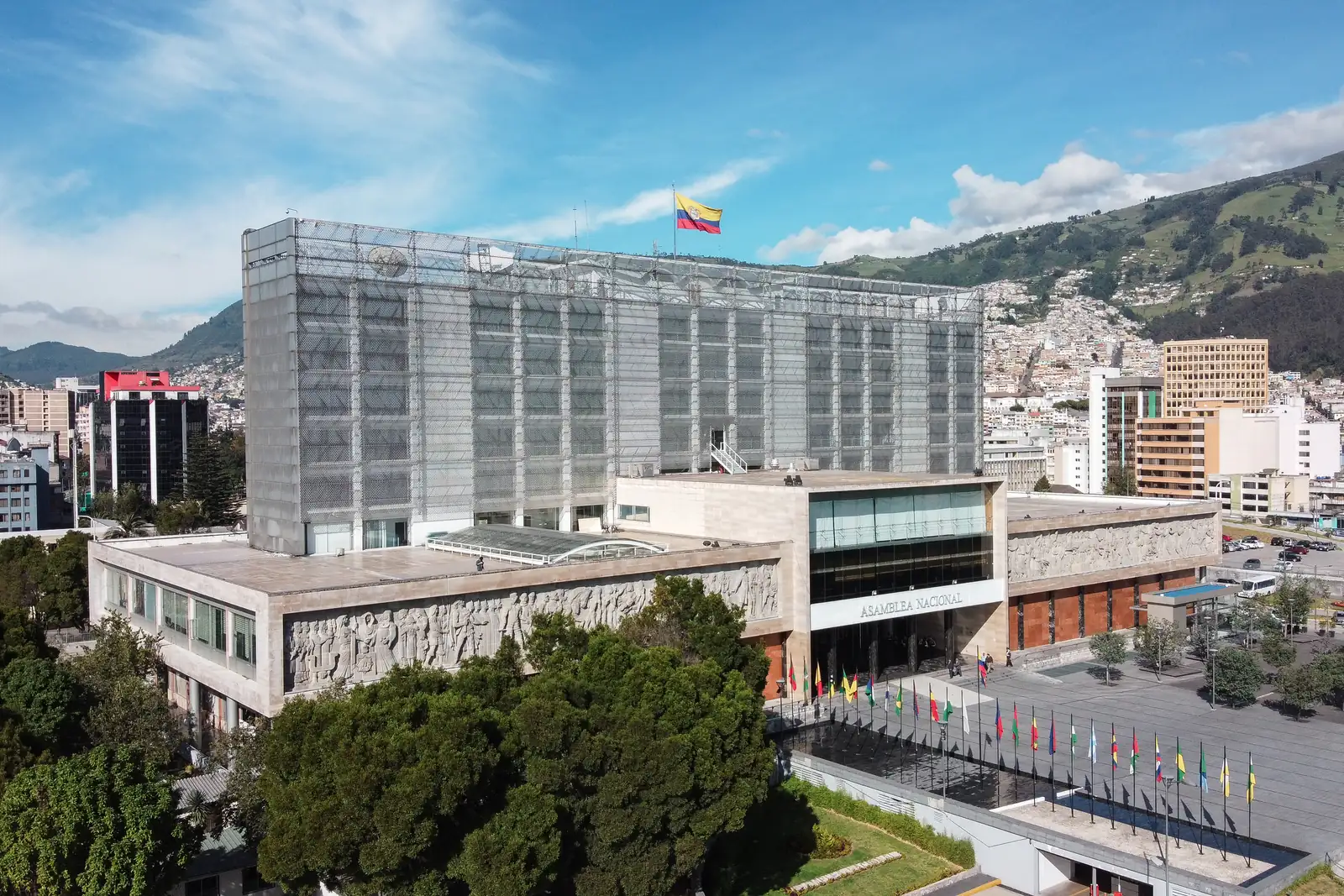
That’s where it stalled. Under Ecuadorian law, a citizens’ bill needs signatures equal to 0.25% of the electoral roll, which came to 34,136. After an extension, the National Electoral Council (CNE) validated 27,697. On 20 August 2026 the Assembly voted 89 to 53 that the initiative couldn’t go forward, and the bill was shelved.
Among other things, the shelved bill would have let every adult grow up to 30 flowering plants at home for personal, non-commercial use.
So, to be crystal clear: Ecuador did not legalize recreational cannabis in 2026.
Plan B: the Constitutional Court
The activists didn’t go home. In September 2026 the outlet Panorama Ecuador reported that cannabis activists had taken the fight to the Constitutional Court. They argue that punishing adult cannabis use violates the constitutional right to the free development of one’s personality, the same argument that has opened doors in courts elsewhere in Latin America. According to that report, the Court has admitted the case, and the activists want it to cover the same ground as the bill, including home growing.
Two big caveats. We couldn’t confirm the case in the Court’s public records, and the report is the only one we found. And even an admitted case is not a ruling: the Court would normally hold hearings with medical, legal and public-health experts before deciding anything. As of October 2026 we found no decision, and nothing on the street has changed. Watch this space, but don’t act on it.
What the law actually says today
This is where the “basically legal” myth comes from, and where it falls apart.
Use isn’t a crime, in principle. Article 364 of Ecuador’s 2008 Constitution treats addiction as a public-health issue and says consumption must not be criminalized. Article 220 of the criminal code (COIP) says possession for personal use isn’t punishable.
But the safe-harbor number is gone. From 2013, a regulatory table gave that principle a number: up to 10 grams of cannabis counted as personal use. President Daniel Noboa repealed the table by Executive Decree No. 28 on 24 November 2023. Since then, prosecutors and judges decide case by case whether you’re a user or a dealer, based on expert reports, the circumstances and your consumption profile.
The replacement hasn’t surfaced yet. The 2025 National Solidarity Law reformed COIP Article 228 so that new “reference parameters” are set by a joint resolution of the Health Ministry, the Prosecutor’s Office and the Judicial Council. The government has stressed these aren’t a return of fixed gram limits. As of October 2026 we couldn’t find a published joint resolution, so in practice it’s still case by case.
Selling and trafficking are serious crimes. The trafficking scales under Article 220 still apply, with long prison terms. There’s no legal retail market and no licensed recreational dispensary anywhere in the country. Anything sold to you as “legal weed” isn’t.
Put simply, there’s no number you can point to at a police checkpoint any more. “It’s only a little” is now a question for a prosecutor, not a defense.
The part that is legal: hemp, CBD and medicine
Ecuador does have a legal, regulated cannabis economy. It just isn’t the one in the hostel stories.
- Hemp and non-psychoactive cannabis with less than 1% THC by dry weight was removed from the controlled-substances regime in 2019. Growing and primary processing are licensed by the Agriculture Ministry, with rules updated in 2025.
- Finished products such as cosmetics, supplements and natural medicines are regulated by ARCSA, the health regulator. Medicines and natural medicinal products must stay under 1% THC; foods and supplements under 0.3%. Each needs sanitary registration or notification and a lab certificate showing the THC level.
- Medicinal cannabis can be prescribed by licensed health professionals under Health Ministry rules. Products at or above 1% THC remain controlled medicines.
If you buy a CBD balm in Cuenca or Olón, look for the sanitary registration and a lab-test code on the label. If they’re missing, put it back.

Traveler and expat reality check
Don’t fly with it. Not in, not out, not between Quito and Galápagos. Airports and borders are where “personal amounts” turn into trafficking investigations, and Ecuador’s ports and airports are under heavy anti-narcotics scrutiny. Even CBD products from home sit in a grey zone. Leave them there.
Don’t buy on the street. It isn’t only the legal risk. Ecuador has spent the last few years fighting organized crime, and street cannabis connects you to that supply chain. You also have no idea what’s in it.
Don’t drive high. Article 384 of the COIP punishes driving under the influence of controlled substances with 30 days in jail, a 15-point deduction from your license and a 24-hour vehicle impound. Ecuador has no roadside drug test the way it has breathalyzers, but the offense is on the books.
Mind local rules. Since a 2020 reform (Article 434.1 of the COOTAD, the code that governs local governments), using controlled substances in public spaces and at mass events is prohibited, with fines, community service or other administrative penalties set by each city’s ordinance. Beaches, parks and malecones are public spaces.
Respect the household. Many expats rent from Ecuadorian families or live in tight-knit towns. What’s normal in Denver or Barcelona can land very differently here.
So where does that leave a high-living kind of person?
In a pretty good place, honestly, once you accept that high living was never about a substance. It’s about altitude, attitude and taking your time. Build a sundown ritual on a rooftop. Make a still corner at home. Pour a cup of hierba luisa and watch the garúa roll in. Follow the Constitutional Court case like the political soap opera it is, because Ecuador’s cannabis chapter clearly isn’t finished.
For now the honest answer is no: weed isn’t legal in Ecuador, using it isn’t automatically a crime, and the line between the two is fuzzier than it has been in a decade. Stay curious, stay informed, and stay out of trouble.
This article is general information as of October 2026, not legal advice. Laws change. If you have a specific situation, talk to a licensed Ecuadorian lawyer.
Sources
- Asamblea Nacional del Ecuador, ‘Asamblea admite a trámite la Iniciativa Popular Normativa para regular el uso responsable de cannabis en Ecuador’ (7 April 2026): https://www.asambleanacional.gob.ec/es/node/115565
- Expreso, ‘Ley para uso responsable del cannabis no avanzó: Asamblea declara imposibilidad para continuar’ (20 August 2026): https://www.expreso.ec/politica/ley-responsable-cannabis-no-avanzo-asamblea-declara-imposibilidad-continuar-293111.html
- Archivo Institucional de la Asamblea Nacional, records of Plenary session No. 116: https://archivo.asambleanacional.gob.ec/index.php/iniciativa-popular-cannabis-improcedente
- Panorama Ecuador, ‘Propuesta de cannabis psicoactivo en Ecuador llega a la Corte Constitucional’ (22 September 2026), the only source found for the court case: https://panoramaecuador.com/politica/propuesta-cannabis-psicoactivo-ecuador-llega-corte-constitucional-20260922.html
- Redcan, text of the citizens’ bill as submitted to the Assembly (January 2026), Art. 7 on home growing: https://redcanec.org/wp-content/uploads/2026/02/LEY-ORGANICA-PARA-LA-REGULACION-INTEGRAL-DEL-USO-RESPONSABLE-DE-CANNABIS-EN-ECUADOR_ASAMBLEA_12_01_26.pdf
- Corte Nacional de Justicia, Resolución 14-2023 on COIP Arts. 220 and 228: https://www.cortenacional.gob.ec/resources/Resoluciones/Fuerza-de-Ley/2023/14-2023-Aclara-dudas-respecto-Arts-220-y-228-COIP.pdf
- El Comercio, ‘Así cambió la tabla de consumo de drogas en Ecuador con la Ley de Solidaridad’ (2025): https://www.elcomercio.com/actualidad/seguridad/cambio-tabla-consumo-drogas-ecuador-ley-solidaridad/
- El Telégrafo, interview with José De La Gasca on the consumption table (June 2025): https://www.eltelegrafo.com.ec/noticias/seguridad/210/jose-gasca-tabla-consumo-drogas-muerta-salud-publica
- ARCSA, technical rules for products containing non-psychoactive cannabis or hemp: https://www.controlsanitario.gob.ec/normativa-cannabis/
- Ministerio de Agricultura y Ganadería, hemp regulation (Acuerdo Ministerial 003, 2025): https://www.agricultura.gob.ec/canamo/
- Ministerio de Salud Pública, Acuerdo Ministerial 148 on medicinal cannabis: https://www.controlsanitario.gob.ec/wp-content/uploads/downloads/2021/06/Acuerdo-Ministerial-148_Reglamento-para-el-uso-terapeutico-prescripcion-y-dispensacion-del-cannabis-medicinal-y-productos-farmaceuticos-que-contienen-cannabinoides.pdf
- Constitución de la República del Ecuador (2008), Art. 364.
- COIP Art. 384, driving under the influence of controlled substances (text via Portal de Tránsito Ecuador): https://transitoecuador.com/legislacion/articulo-384-del-coip/
- Primicias, ‘Sin control ni sanción: conducir bajo los efectos de drogas no tiene castigo en Ecuador’: https://www.primicias.ec/seguridad/falta-control-consumo-drogas-conductores-accidentes-transito-vias-ecuador-107373/
- Ley Orgánica contra el Consumo y Microtráfico de Drogas, Registro Oficial Suplemento 266 (13 August 2020), Art. 17 adding Art. 434.1 to the COOTAD: https://www.asambleanacional.gob.ec/es/system/files/sro266_20200813.pdf