

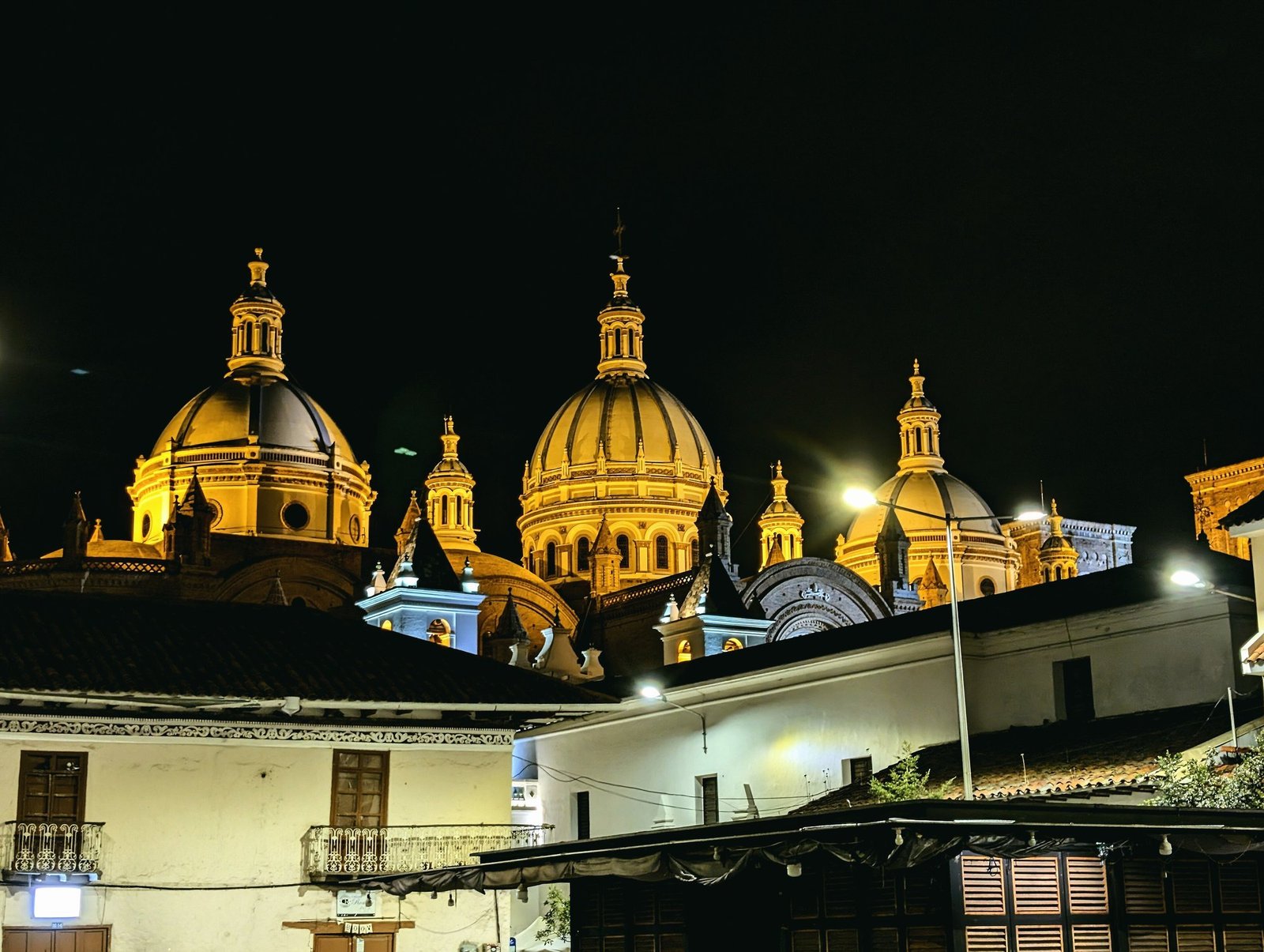
Every year, at the start of November, Cuenca does something unusual. Most of Ecuador is visiting cemeteries for Día de los Difuntos, and the country’s most composed colonial city puts on its loudest party: free concerts in the plazas, a craft fair stretched along both banks of the river, parades, noches cuencanas and a lot of people who came “just for the day” and stay until Tuesday.
In 2026 the city turns 206, and the calendar has stacked everything into a four-day weekend (Saturday 31 October to Tuesday 3 November). Here’s the story behind the party and how to enjoy it like a local.
The day Cuenca said “enough”
In late 1820, independence was spreading down the Pacific coast of South America. Guayaquil had declared itself free on 9 October. In Cuenca, still under Spanish rule, the patriots were ready.
On 3 November 1820, a group led by Captain Tomás Ordóñez, remembered locally as the soul of the uprising, disarmed a royalist escort and proclaimed the city’s independence. José María Vázquez de Noboa led the political side. On 15 November the patriots approved a Plan de Gobierno, a founding charter for what they called the República de Cuenca.
The republic was brave and very short. On 20 December 1820, royalist troops defeated the patriots at Verdeloma, near Biblián, and Spanish rule returned. That’s about 47 days of freedom. Cuenca’s definitive independence came only on 21 February 1822, when Antonio José de Sucre’s army entered the city, a few months before the Battle of Pichincha.
One more detail that historians in Cuenca like to tell: the original text of that 1820 charter was lost for nearly a century. It was found in Quito and handed to the city in 1915, and it sparked the research that fixed 3 November as the official date. So the city celebrates the day it declared independence, not the day it finally got it.
The CIDAP crafts festival: the river becomes a market
If you do one thing this weekend, walk the Festival de Artesanías de América, organized by CIDAP, the Inter-American Centre for Crafts and Popular Arts, which is based in Cuenca. This year is the 24th edition:
- When: opening night Friday 30 October at 19:00 with a Noche Cuencana. Open to the public 31 October to 3 November, 10:00 to 20:00.
- Where: along both banks of the Tomebamba river, on Paseo 3 de Noviembre and Avenida 12 de Abril, between the Vivas nos queremos bridge and the Centenario bridge. The International Pavilion is in CIDAP’s car park.
- Who: about 175 artisans from 13 countries, with Peru as guest of honour. Organizers say it’s the first edition with makers from Galápagos, which means all four of Ecuador’s regions are represented, and the first with artisans from Korea, Germany and Spain.
- What: wood carving, glasswork, fine jewellery and textiles, among others.
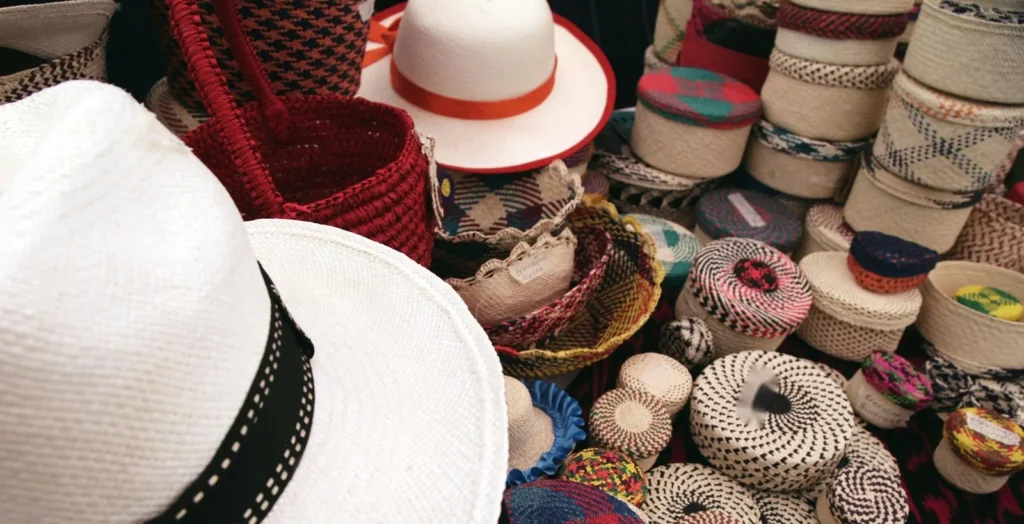
How to do it well: go in the morning, when it’s quieter and the artisans have time to talk. Bring cash, and ask who made what, where, and how long it took. Look out for toquilla straw hats, the ones the world wrongly calls “Panama hats.” UNESCO added their traditional weaving to its list of humanity’s intangible cultural heritage in 2012.
The party: Huaynacapazo and the noches cuencanas
The Municipality presented its programme for the 206th anniversary, Cuenca te hace bien, on 23 October: more than 330 activities, a budget of about US$270,000 and six free concerts under the banner ¡De Ley en Cuenca! This year there are no big international headliners paid with public money. The student parade goes through the historic centre on Thursday 29 October, and the pregón (the opening party) is on Friday 30 October from 18:00 at Parque Curiquingue, with Los Búfalos. On Saturday 31 October there’s a Noche Romántica with Marqués, Sergio Sacoto and Sonora Dinamita, and on Sunday 1 November a vallenato night and a rock night.
The big one is the Huaynacapazo, on Monday 2 November from 18:00 along Avenida Huayna Cápac: three free stages, with Fulanito on the tropical stage, Los Dukes on the national stage and Proyecto Coraza on the Latin stage, plus local acts. Check the Municipality of Cuenca’s official channels for any last-minute changes.
The festival’s name honours Huayna Cápac, the Inca ruler closely tied to Tomebamba, the Inca city that stood where Cuenca is today. Its best-known remains are at Pumapungo. Local tradition says he was born there, though historians aren’t sure whether he was born in Tomebamba or Cusco.
Other things worth catching:
- The Cholita Cuencana de los Mercados election (4th edition), which honours women who work in the city’s markets and plazas: Saturday 31 October from 10:00 at the Plataforma de Miraflores, with folk dance, live music and, of course, colada morada and a giant guagua de pan.
- The Sesión Solemne on 3 November at 11:00 in the Salón de la Ciudad, when the city council hands out its honours. This year’s list includes the painter Jorge Chalco, the artisan Polivio Sinchi, the well-known local figure Paco El Morlaco (for solidarity) and the Ballet Folclórico Kawsayñan, for their work preserving cultural heritage.
- The Barranco at night. The cliff of colonial houses above the Tomebamba, part of a historic centre that UNESCO declared a World Heritage Site in 1999, is beautiful lit up. For a drink afterwards, Calle Larga has been the setting for at least one of our reader confessions.
How to enjoy it without losing your mind
- Book now. Tourism groups expect Cuenca hotels to be 70 to 75% full this weekend.
- Walk. The centre is compact, and traffic and parking around the river are tough during the fiestas.
- Pace the altitude. Cuenca sits at about 2,500 metres. If you’re coming up from the coast, go easy on the first night.
- Go out to the páramo. Escape the crowds for a morning in Cajas National Park, 32 km away. Our Wild Side guide this week tells you how.
- Mind the dates. Monday 2 November is also Día de los Difuntos, so many families spend the morning at the cemetery. Save your loudest plans for the evening.
- Want something smaller? Cuenca’s music scene goes well beyond the big stages. Our piece on why live music is going intimate is a good way into it.
Why it still matters
The República de Cuenca lasted 47 days and lost its only battle. You could call that a footnote. Cuenca treats it as a founding story: a small city that decided not to wait for permission. Two hundred and six years later, the best way to honour that is to fill the riverbank, buy something made by hand from the person who made it, and stay up later than you planned.
Programme details re-checked on 26 October 2026. Times and venues can change. Check the Municipality of Cuenca and CIDAP before you go.
Sources
- El Mercurio, ‘La proclama independentista del 3 de noviembre de 1820’ (2 November 2020): https://elmercurio.com.ec/cuenca/bicentenario-noticias/2020/11/02/la-proclama-independentista-del-3-de-noviembre-de-1820/
- Wikipedia (Spanish), ‘Independencia de Cuenca’ (overview and dates, cross-checked with the sources below): https://es.wikipedia.org/wiki/Independencia_de_Cuenca
- Universidad de Cuenca repository, ‘La Constitución de la República de Cuenca de 1820: un acercamiento jurídico’: http://dspace.ucuenca.edu.ec/handle/123456789/41354
- Universidad del Azuay, ‘Cuenca 200 años soberana’: https://doi.org/10.33324/ceuazuay.135
- El Mercurio, ‘El CIDAP presentó la edición 24 del Festival de Artesanías de América’ (14 October 2026): https://elmercurio.com.ec/cuenca/2026/10/14/festival-artesanias-cidap-cuenca/
- El Mercurio, ‘Cuenca prepara cuatro días de fiestas con el tradicional Huaynacapazo y conciertos gratuitos’ (16 October 2026): https://elmercurio.com.ec/cuenca/2026/10/16/fiestas-cuenca-noviembre-2026-conciertos-agenda/
- Alcaldía de Cuenca, official festival agenda ‘Cuenca te hace bien’ (PDF, presented 23 October 2026): https://elmercurio.com.ec/wp-content/uploads/2026/10/agenda_fiestas_Cuenca_2026.pdf
- Primicias, ‘Cuenca celebra 206 años de Independencia con más de 330 eventos’ (23 October 2026): https://www.primicias.ec/sociedad/cuenca-agenda-fiestas-idependencia-2026-conciertos-ferias-eventos-feriado-135593/
- El Mercurio, ‘Seis conciertos gratuitos en las festividades de independencia’ (24 October 2026): https://elmercurio.com.ec/cuenca/2026/10/24/seis-conciertos-gratuitos-festividades-independencia-cuenca/
- El Universo, ‘Fiestas de Cuenca 2026: agenda de conciertos, desfiles y ferias’ (26 October 2026): https://www.eluniverso.com/comunidad/ecuador/fiestas-de-cuenca-2026-agenda-de-eventos-y-conciertos-nota/
- Metro Ecuador, ‘Fiestas de Cuenca 2026: quiénes serán homenajeados’ (20 October 2026): https://www.metroecuador.com.ec/noticias/2026/10/20/cuenca-celebra-su-independencia-con-homenajes-a-personajes-destacados/
- Cuenca Expat, ‘Cuenca Prepares for Independence Day Celebrations and Cholita Cuencana Election’ (17 October 2026, citing El Mercurio): https://cuencaexpat.com/articles/cuenca-prepares-for-independence-day-celebrations-and-cholita-cuencana-election
- GAD Municipal de Cuenca, ‘Festival del Huaynacapazo’: https://www.cuenca.gob.ec/101_propuestas/festival-del-huaynacapazo
- UNESCO World Heritage Centre, ‘Historic Centre of Santa Ana de los Ríos de Cuenca’ (inscribed 1999): https://whc.unesco.org/en/list/863/
- UNESCO Intangible Cultural Heritage, ‘Traditional weaving of the Ecuadorian toquilla straw hat’ (inscribed 2012): https://ich.unesco.org/en/RL/traditional-weaving-of-the-ecuadorian-toquilla-straw-hat-00729
- Expreso, ‘El turismo de Ecuador se alista para el feriado de noviembre…’ (16 October 2026): https://www.expreso.ec/economia-y-negocios/turismo-ecuador-alista-feriado-noviembre-toque-queda-cortes-luz-299683.html
- Cover photo: PHOTO: MARTIN.VASCOVINUEZA / WIKIMEDIA COMMONS (CC BY-SA 4.0), EDITED (licence)