

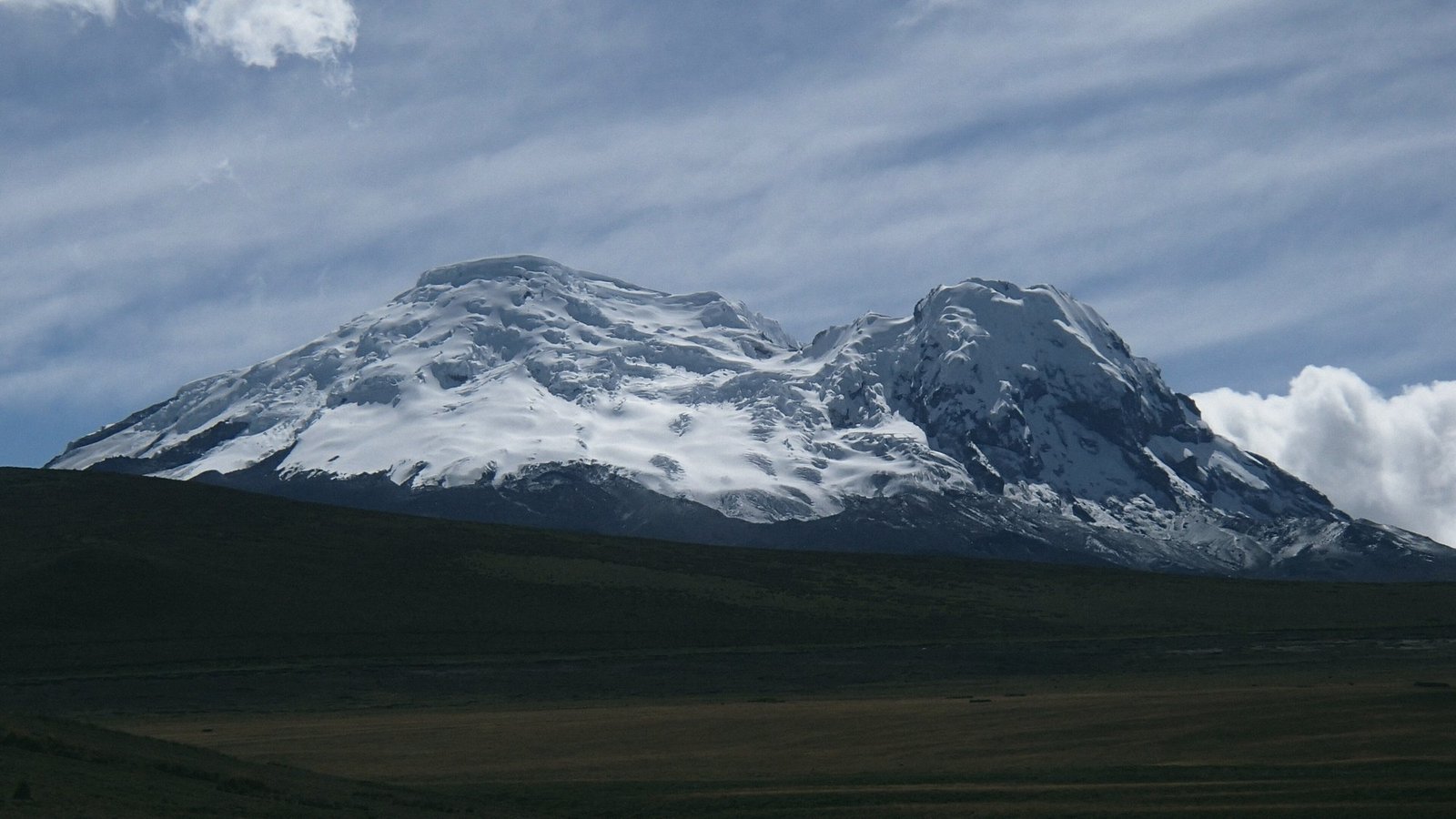
Most visitors who want a volcano day from Quito end up at Cotopaxi. Fair enough: the cone is famous, the refuge hike is clear, and we already wrote the without-a-tour playbook. Antisana is the quieter sibling — still free, still high, still wild, and one of the best places in northern Ecuador to look for Andean condors without joining a bus tour.
You can do a solid day trip with your own car or a hired camioneta. You do not need a guide for the main Laguna La Mica area. You do need layers, water, an early start and respect for the altitude.
Where it is, and what it is not
Parque Nacional Antisana sits about 50 kilometres southeast of Quito, straddling Pichincha and Napo. The volcano itself rises to about 5,758 metres — Ecuador’s fourth-highest peak — with permanent snow and glaciers. The protected area covers more than 120,000 hectares of páramo and Andean forest.
In July 2021 the old Antisana Ecological Reserve was upgraded to a national park, partly to strengthen protection for the Andean condor (Vultur gryphus). Biodiversity tallies published for the area list hundreds of bird species and dozens of mammals — you will not see most of them in a day, but the landscape alone is the show.
This is not Cotopaxi (different volcano, different access, usually fewer tour vans). It is not Cajas (that is Cuenca’s lake district). It is also not a casual stroll at city altitude: La Mica sits in true páramo, well above Quito’s 2,800 metres.
Free entry, two gates, strict hours
Entry to the national park is free. Registration at the guard post is mandatory. Carry ID.
Published hours for the main visitor gate, Guardianía La Mica (reached via Sangolquí–Pintag):
- Entry: about 08:00 to 14:00
- Exit: by about 17:00
- Open daily, year-round, unless weather or emergencies close it
The other gate, Guardianía El Tambo (off the Quito–Papallacta road, before Papallacta), lists roughly 07:00–15:00 entry and exit by 18:00. El Tambo is the start of longer condor-trek style routes; most first-timers aiming for La Mica use the Pintag / La Mica entrance.
Park rules that catch people out: – No motorbikes – No pets – No alcohol, no weapons, no hunting, no litter, no off-road driving, no campfires – Stay on marked tracks – Camping is allowed in designated zones (no staffed refuge on the volcano itself)
Hours can tighten when fog, rain or rescue work hits. Ask the guard on arrival when you must be back at the gate.
How to get there without a tour
By car (easiest). From southern or valley Quito, take the road toward Sangolquí and continue to Píntag. From Píntag’s main square, follow signs to Antisana on a paved road suitable for ordinary cars in dry conditions — still, Sierra rain can make the last stretch slick. You pass the Pushipungo checkpoint and continue toward Guardianía La Mica (about 20 km from Píntag according to local guides). Allow 1.5–2.5 hours from central Quito depending on traffic and weather. Fill the tank before Píntag; services thin out.
Without a car. Public transport drops you in Píntag; from there private camionetas sometimes wait to run visitors up to the park and back after a couple of hours. Prices are not standardised and can feel high for a short wait — agree the fare before you climb in. A full-day private driver from Quito is the comfortable middle option if you do not want to self-drive the mountain road.
Papallacta note. The El Tambo gate sits near the hot-springs corridor. If you are combining páramo with a soak, that is a different logistics puzzle (and our Papallacta piece may still be rolling out). For a clean first visit, pick one gate and one plan.
What to do once you are inside
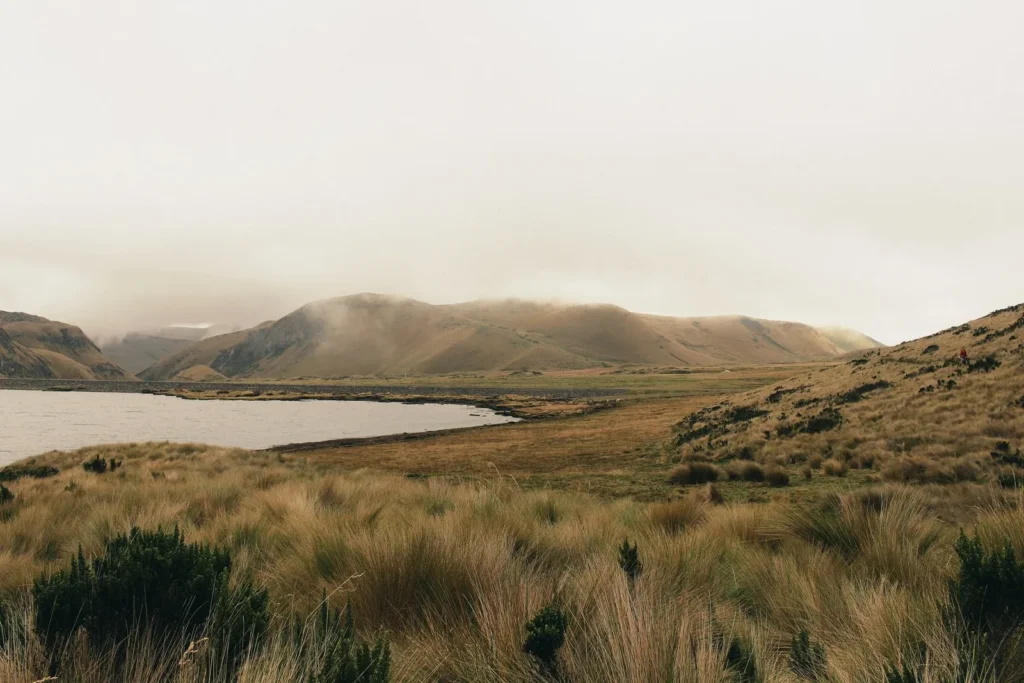
Laguna La Mica (Micacocha). Glacial lake, interpretive kiosk, short marked trails (Micaloma, Pato Urco, Gallaretas, pier path and variants — distances from about 1 to 3 km). Look for ducks and coots on the water; scan ridges for condors and caracaras. Wind is the real weather here.
Condor viewpoints. Along the access road and near features like Mirador Isco, Mirador Cóndor / Patourco and the cliffs of Antisanilla, this páramo holds one of the most important wild condor populations in the northern Andes. Best odds are often early morning, roughly 07:00–09:00 — which means you want to be at the gate when it opens, not sipping a second coffee in Cumbayá. Bring binoculars. Do not drone near nests.
Short walks vs summit dreams. Day visitors stick to the lake and viewpoints. Climbing Antisana’s ice is a technical multi-day affair with permits (including water-company / MAATE paperwork for some approaches) and a high-mountain guide. That is a different article.
When a guide still helps
Go without a guide if you have a reliable vehicle, offline maps, warm kit and are happy to stay on signed trails around La Mica.
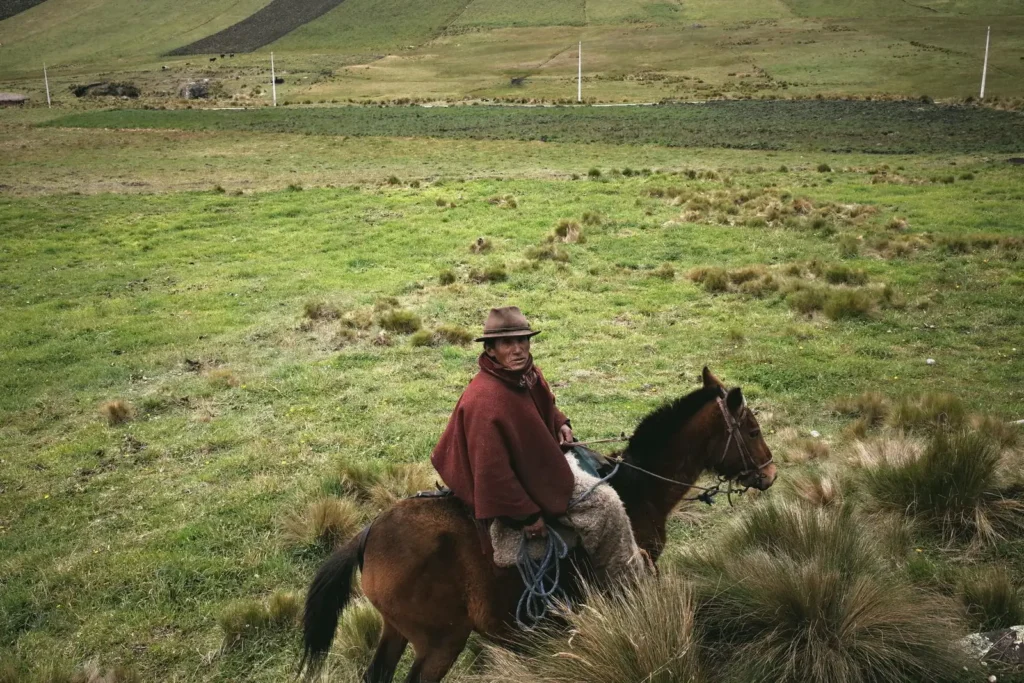
Hire a birding or local guide if you specifically want condors, if fog is forecast, if you are uneasy driving mountain roads in rain, or if you plan the longer Condor Trek corridor between El Tambo and Cotopaxi (advanced, multi-day).
Altitude, weather, packing
Quito already sits high. Antisana’s visitor zone sits higher still. General high-altitude travel guidance (CDC Yellow Book style) is simple and non-medical: take it easy, especially the first day you go higher; avoid alcohol and hard exercise while you adjust; turn around if you feel unwell. This is not medical advice — if you have heart, lung or blood-pressure conditions, talk to a clinician before big altitude days.
Pack: windproof jacket, warm mid-layer, sun hat and sunscreen (UV is fierce on the equator páramo), sunglasses, water, snacks, binoculars, cash for a camioneta, and a dry bag for your phone. November is rainy season in the Sierra: expect cloud, drizzle and sudden clear windows. Waterproof shoes beat fashion boots.
Leave: drones over wildlife, speakers, pets, the urge to scramble off-trail for a photo.
A sample day from Quito
05:30 — leave the city
07:30–08:00 — Píntag / gate registration as soon as entry opens
08:00–10:00 — condor scan from roadside viewpoints
10:00–13:00 — Laguna La Mica walks and lunch in the car (there is no full-service café at the lake)
13:30 — start down so you are out well before 17:00
Late afternoon — back in Quito for a hot shower and an early night
How it sits next to Cotopaxi and Cajas
If you loved Cotopaxi National Park without a tour, Antisana scratches a similar itch with more birding and fewer refuge selfies. If you are based in Cuenca, stick with Cajas for your lake-páramo day — Antisana is a Quito-side trip.
Free parks are a gift. Treat this one like the high, fragile place it is, and it will give you wind, silence and — if the thermals are kind — a condor the size of a door sailing over your head.
Sources
- Antisana.com travel guide: free entry; La Mica gate entry 08:00–14:00, exit by 17:00; El Tambo 07:00–15:00 / out by 18:00; no motorbikes, no pets, no alcohol, no weapons, no fires; mandatory registration; ~50 km SE of Quito; volcano 5,758 m; park created as national park 21 Jul 2021 (from ecological reserve): https://www.antisana.com/
- El Universo / La Revista (2021): Antisana becomes National Park, Andean condor refuge: https://www.eluniverso.com/larevista/ecologia/se-creo-el-parque-nacional-antisana-refugio-del-condor-andino-nota/
- Quito Informa (5 Aug 2021): Antisana upgraded to National Park: https://www.quitoinforma.gob.ec/2021/08/05/area-de-proteccion-hidrica-antisana-se-convierte-en-parque-nacional/
- CDC Yellow Book, High-Altitude Travel and Altitude Illness (2026 ed.) — bot fetch 403; cite via search/known guidance: take it easy first 48 hours, avoid alcohol and heavy exertion: https://www.cdc.gov/yellow-book/hcp/environmental-hazards-risks/high-altitude-travel-and-altitude-illness.html
- Mood Chillin Cotopaxi guide: https://moodchillin.com/cotopaxi-national-park-without-a-tour/
- Mood Chillin Cajas guide: https://moodchillin.com/cajas-national-park-day-hike-cuenca/
- Cover photo: PHOTO: “Antisana im September 2018” BY STEFAN WEIGEL / WIKIMEDIA COMMONS (CC BY-SA 4.0), EDITED