

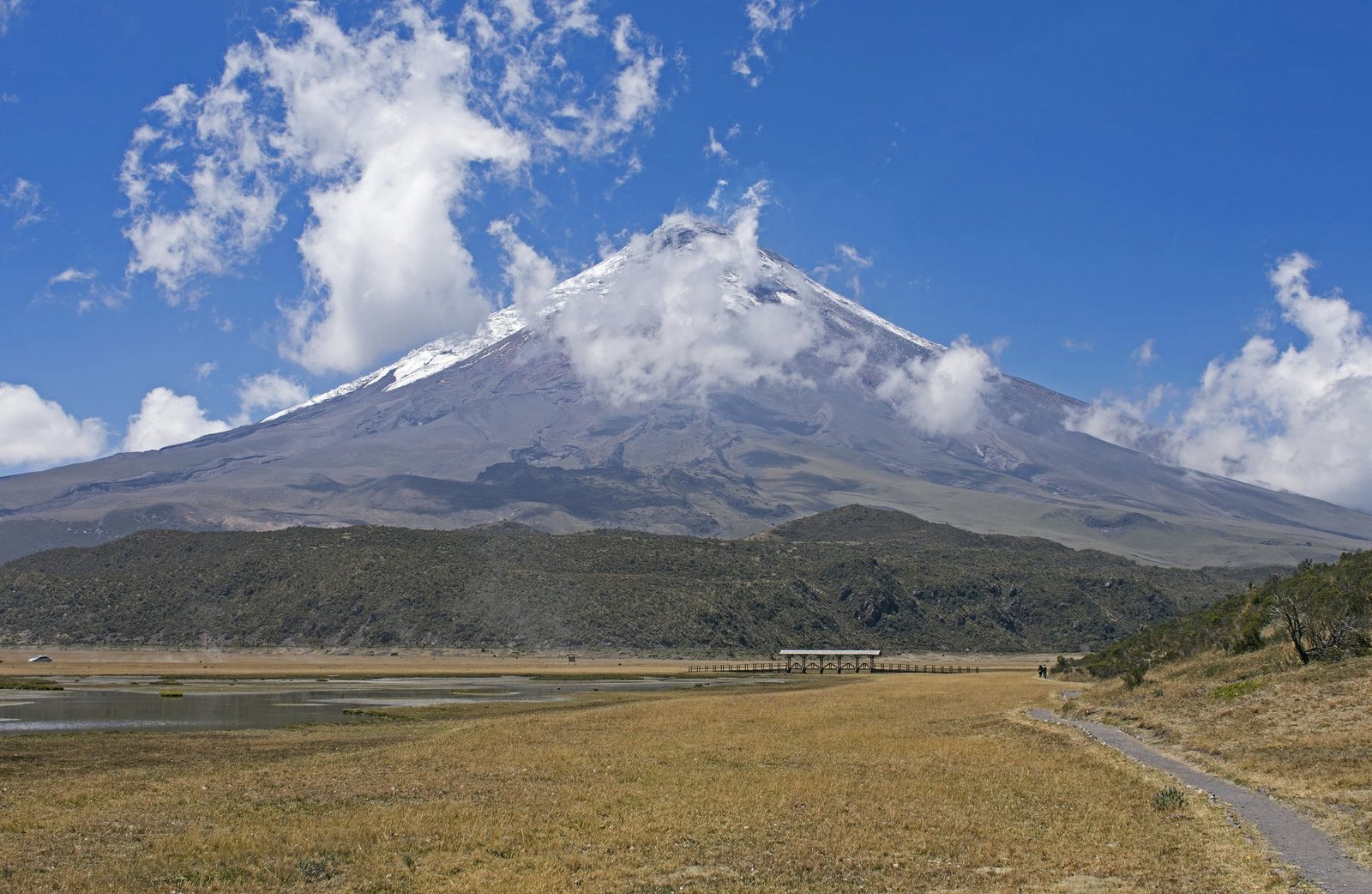
On a clear morning from southern Quito, you can see it: a near-perfect white cone floating above the haze. Cotopaxi, 5,897 metres, is one of the most photographed volcanoes in the Andes, and one of the most watched. It last erupted between October 2022 and mid-2023, and before that in 2015.
The good news for anyone who’d rather not book a tour: entry to the national park is free, it’s well connected by bus, and the two classic walks don’t need a guide. Here’s how to do it yourself, safely, this November.
First: what is the volcano doing?
Check the volcano’s status before anything else. The Instituto Geofísico of the Escuela Politécnica Nacional (IG-EPN) monitors Cotopaxi around the clock and publishes regular reports.
In its latest field report, from a campaign on 14 October 2026 and published on 21 October, IG-EPN rated both internal and surface activity as low, with no change. The highest temperature measured in the crater was just over 156 °C, down from readings above 200 °C in April this year. The institute also noted that the glacier cover keeps being affected.
Low doesn’t mean extinct. Cotopaxi’s 1877 eruption sent mudflows (lahars) all the way to Latacunga, which is why the region takes its emergency plans seriously. Check IG-EPN’s site or social channels on the day you go. If the alert changes, the park can close at short notice.
The rules: free, registered and in daylight
According to the Ministerio del Ambiente (MAE):
- Entry is free. Register at the gate with your passport or cédula.
- Vehicles enter between 08:00 and 15:00 and must be heading out by 17:00.
- The main gates are Control Caspi (the usual entry from the Panamericana, on the south-west side) and Control Norte (from Machachi).
- No pets, no fires, and stay on marked tracks.
On 21 October 2026, the Secretaría de Gestión de Riesgos and the MAE also signed off a new self-protection protocol for the park. The key points for visitors:
- Use only official routes. No off-trail adventures.
- Bring proper thermal and waterproof clothing.
- No overnight stays outside authorised areas.
- Guided high-mountain groups need a first-aider, and guides must carry a radio.
- In an emergency, call ECU 911 and follow rangers’ instructions.
Hours and rules can change. If you’re planning around a long weekend, check the MAE’s channels first.
Getting there without a tour
Bus. From Quito’s Quitumbe terminal, take any bus heading south to Latacunga and ask to be dropped at the turn-off for Cotopaxi National Park, near Lasso, about 1.5 hours away. Say “la entrada al Parque Cotopaxi” clearly.
Camioneta. At the turn-off, local pickup drivers wait to take visitors into the park, usually to the refuge car park and back with stops along the way. There’s no official rate, so agree the price, the stops and the waiting time before you get in. Splitting a truck with other travellers makes it far cheaper.
Your own car. Inside the park the roads are dirt and gravel, and the final climb to the car park is steep and loose. A high-clearance vehicle or 4×4 is strongly recommended, especially after rain.
Go early. Mornings are usually clearer, and clouds tend to build on the cone by midday.
Walk 1: Limpiopungo lagoon (easy)
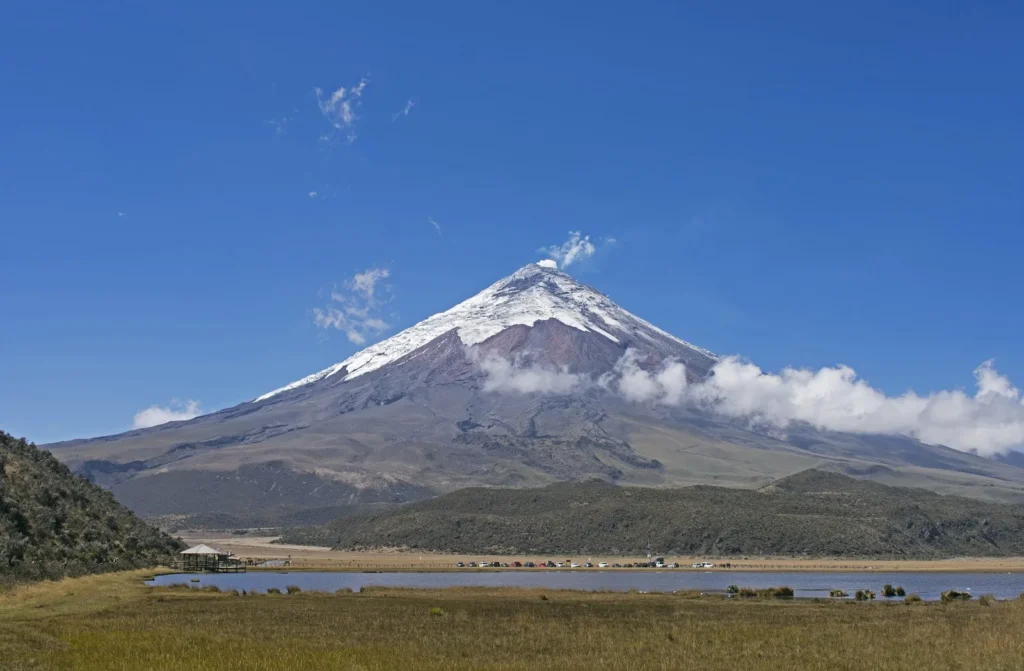
At around 3,800 metres, Limpiopungo is a shallow lake at the foot of Rumiñahui, with Cotopaxi towering on the other side. A flat path loops around it in roughly an hour or an hour and a half. It’s the best spot to see the park’s wildlife: wild horses, white-tailed deer and, if you’re lucky, an Andean fox. Carunculated caracaras patrol the grass, and condors are possible but rare. Bring binoculars and keep your distance.
Walk 2: the José Ribas refuge (hard, but short)
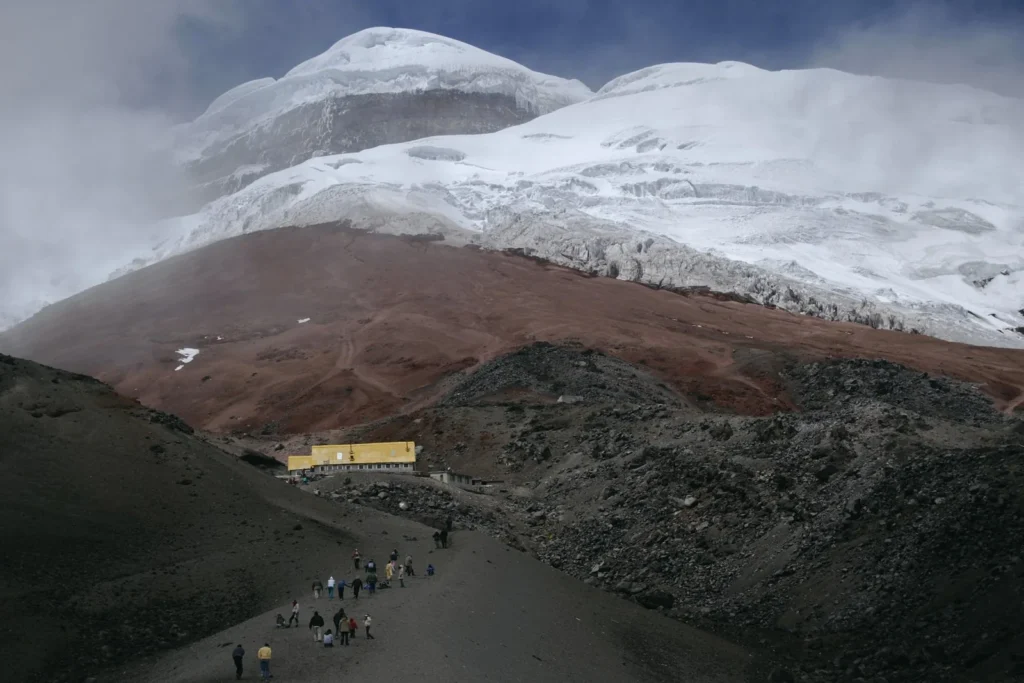
This is the big one. From the car park at about 4,500 metres, a zigzag trail of black volcanic sand climbs to the José Ribas refuge at 4,864 metres. It’s only a few hundred metres of climbing, but at that altitude most people need 45 minutes to an hour, stopping often. Coming down is fast and fun: you half-slide down the sand.
Above the refuge, the glacier and the summit route are only for properly equipped climbers with a certified guide. Don’t wander onto the ice.
Altitude matters here. Spend a few days in Quito first. Walk slowly, drink water and skip alcohol the night before. If you get a strong headache, nausea, dizziness or unusual shortness of breath, turn around. Going down is the main remedy for altitude sickness, according to the CDC’s guidance on high-altitude travel. If symptoms are severe, call ECU 911.
What to pack
- Warm layers, a waterproof jacket, a hat and gloves. It can go from sunshine to sleet in 20 minutes.
- Sunscreen and sunglasses. The sun at this altitude is intense, even through cloud.
- Water and snacks. There are few places to buy anything inside the park.
- Cash for the camioneta.
- Your ID for registration.
Make it a weekend
The park sits between Quito and Latacunga, and this year’s timing is good. Latacunga’s November Mama Negra parade falls on Saturday 7 November 2026, so you can hike on Friday and catch the parade the next day. Our Mama Negra guide this week has the details.
If you want more highland walking, the Quilotoa Loop is just west of Latacunga, and the southern equivalent of this trip is Cajas National Park near Cuenca. Sore legs afterwards? This week’s guide to the Papallacta hot springs, on the other side of Quito, is the cure.
Cotopaxi is a living volcano and a protected ecosystem. Visit with respect, stay on the trail and leave nothing behind.
Checked on 29 October 2026. Volcano activity and park access can change at short notice. Check IG-EPN, the Ministerio del Ambiente and ECU 911 on the day you go. This is general information, not medical advice.
Sources
- Instituto Geofísico (IG-EPN), Cotopaxi news and reports: https://www.igepn.edu.ec/informacion-y-noticias/tag/cotopaxi
- Secretaría de Gestión de Riesgos, ‘SGR y MAE definieron protocolo de autoprotección para Parque Nacional Cotopaxi’ (21 October 2026): https://www.gestionderiesgos.gob.ec/sgr-y-mae-definieron-protocolo-de-autoproteccion-para-parque-nacional-cotopaxi/
- Ministerio del Ambiente, ‘El Parque Nacional Cotopaxi mantiene sus puertas abiertas al público’: https://www.ambiente.gob.ec/el-parque-nacional-cotopaxi-mantiene-sus-puertas-abiertas-al-publico/
- Cotopaxi Trek, ‘Cotopaxi por tu cuenta’ (bus, camioneta and refuge logistics): https://cotopaxitrek.com/en/guias/cotopaxi-por-tu-cuenta/
- Cotopaxi Trek, ‘Cotopaxi abierto’ (access status and routes): https://cotopaxitrek.com/en/guias/cotopaxi-abierto/
- CDC Yellow Book, ‘High-Altitude Travel and Altitude Illness’ (2026 edition): https://www.cdc.gov/yellow-book/hcp/environmental-hazards-risks/high-altitude-travel-and-altitude-illness.html
- Cover photo: PHOTO: “Cotopaxi National Park Cotopaxi seen from the trail around Laguna de Limpiopungo 12” BY YMBLANTER / WIKIMEDIA COMMONS (CC BY-SA 4.0), EDITED