

If you’ve only ever done Christmas as one big day of presents, Ecuador will rearrange your calendar. Here the season builds slowly, through neighbourhood prayers, children dressed as shepherds, brass bands, fried dough and hot chocolate, then explodes on New Year’s Eve with a very Ecuadorian bonfire.
After Fiestas de Quito wind down on 7 December, the country turns fully to Christmas. Here’s what happens, when, and how to take part without stepping on anyone’s toes.
December 2026 at a glance
| Date | What happens |
|---|---|
| Early December | Nativity scenes (pesebres) and trees go up; neighbourhood Pases del Niño begin |
| Wed 16 – Thu 24 Dec | The novena: nine nights of prayer, carols and food |
| Thu 24 Dec | Pase del Niño Viajero in Cuenca; Nochebuena dinner; Misa del Gallo at midnight |
| Fri 25 Dec | Christmas Day, a national holiday (long weekend) |
| Mon 28 Dec | Día de los Santos Inocentes: pranks and jokes |
| Thu 31 Dec | Año Viejo: effigies, viudas, and burning at midnight |
| Fri 1 Jan 2027 | New Year’s Day, a national holiday |
| 1–6 Jan | Diablada Pillareña in Píllaro; Riobamba’s Rey de Reyes processions around Epiphany |
The novena: nine nights, one Ecuadorian author
From 16 to 24 December, families, neighbours, offices and parishes gather every evening for the novena del Niño. People take turns reading the prayers, sing villancicos such as “Dulce Jesús mío” and “Campana sobre campana”, and finish with something to eat and drink. Hosting rotates, so the same group moves from living room to living room across the nine nights.
Here’s a detail that surprises many Colombians: the classic Novena de Aguinaldos prayed across the region was written in the mid-18th century by Fray Fernando de Jesús Larrea, a Franciscan born in Quito in 1700, who did much of his mission work in Colombia and died in Cali in 1773. The Colombian Bishops’ Conference names him as the author.
If you’re invited: go. Bring something small to share (bread, fruit, cookies), arrive on time, and don’t worry if you don’t know the words. Someone will hand you a booklet. Joining in is the whole point.
The pesebre: Bethlehem, Andean edition
Most homes, churches and many shops set up a nativity scene. Alongside the Holy Family, shepherds and animals, Ecuadorian pesebres often adapt the scene to local landscapes and wildlife, so no two look alike. The cradle traditionally stays empty until midnight on the 24th, when the baby Jesus is placed in it.
The Pase del Niño Viajero, Cuenca’s Christmas Eve
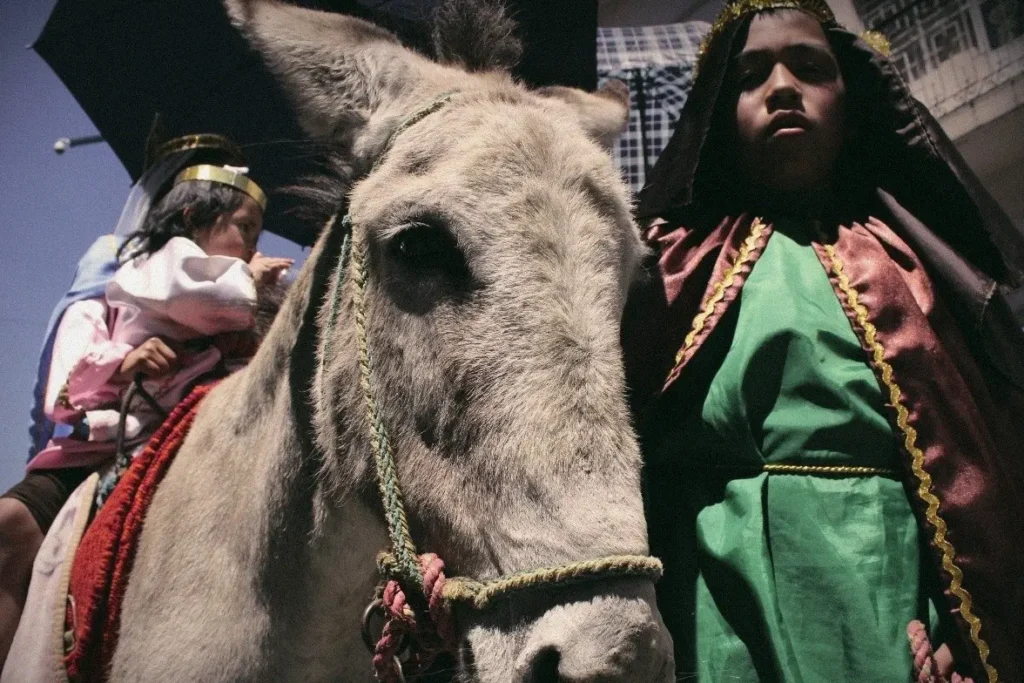
All over the Sierra in December, Pases del Niño fill the streets: processions carrying an image of the infant Jesus, with dancers, village bands, decorated floats and children in costume, often re-creating the Holy Family. The biggest of all is Cuenca’s Pase del Niño Viajero on 24 December.
- The image at its heart dates from 1823. In 1961, a Cuenca churchman, Monseñor Miguel Cordero, took it on a journey to the Holy Land and Rome. When it came home, a devotee greeted it with “¡Ya vino el viajero!” (“The traveller is back!”; some accounts say “¡Ya llegó el viajero!” and name a different woman), and the name stuck.
- It was declared part of Ecuador’s national intangible cultural heritage in 2008.
- The procession starts after a mass at Cuenca’s cathedral and travels along Calle Bolívar to Parque Calderón. The route is only about sixteen blocks, but the crowds mean it takes several hours. Crowd estimates vary widely: the Tourism Ministry put it at about half a million in 2018, while Primicias reported around 100,000 in 2019.
- The heritage institute notes that many Cuencano migrants fly home for it or recreate it abroad.
Going in 2026 (Thursday 24 December): arrive early, pick a spot along Calle Bolívar, bring water, sun protection and patience, and keep children close. It’s a religious event first and a spectacle second, so don’t push through the procession for a photo. If you’re in Cuenca earlier in the season, our guide to Cuenca’s November fiestas covers the city’s other big moment.
In Riobamba, the processions peak around Epiphany (5–6 January) with the Pases del Niño Rey de Reyes, full of characters such as the vasallos.
Nochebuena: the dinner and the midnight mass
The big meal is on Christmas Eve, not Christmas Day. Typical tables include roast turkey or stuffed chicken, pernil (roast pork leg) or hornado, tamales, and desserts like pristiños (fried dough rings drizzled with miel de panela, a raw cane-sugar syrup), buñuelos and pan de pascua, usually with hot chocolate. Many families go to the Misa del Gallo, the midnight mass, before or after eating. On the 25th, the streets are quiet, shops are often closed and the leftovers are glorious.
If you love Ecuador’s food rituals, this is the December sibling of November’s colada morada and guaguas de pan.
28 December: the Day of the Holy Innocents
On Día de los Santos Inocentes, Ecuadorians play inocentadas, harmless pranks and fake news among friends and family. If something sounds too wild to be true on 28 December, it probably is.
31 December: burning the Año Viejo
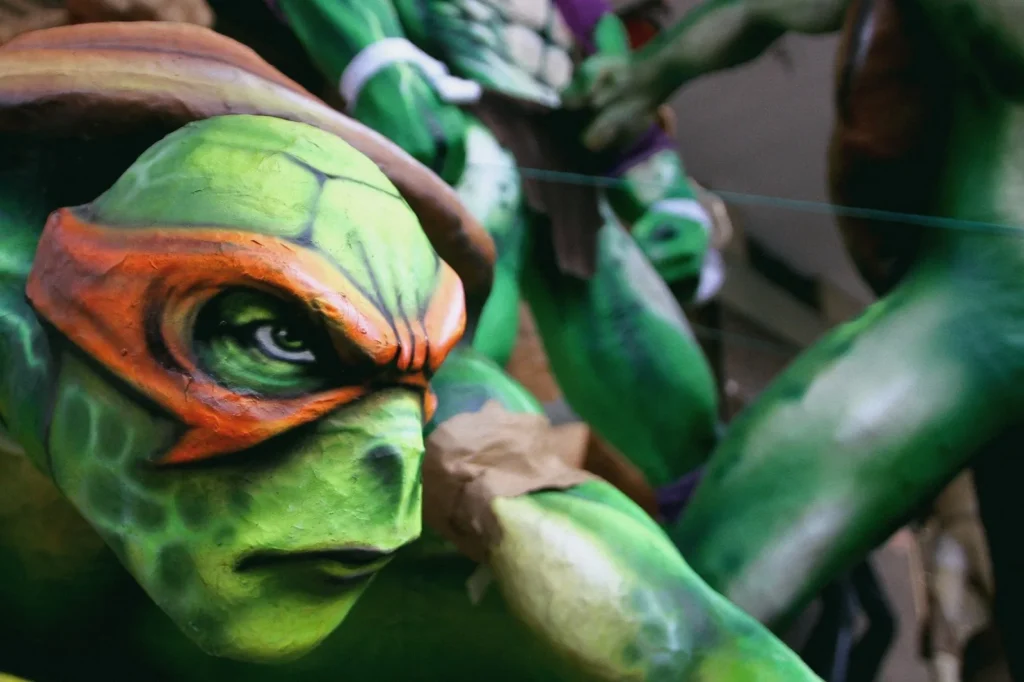
New Year’s Eve is Ecuador’s most irreverent night. For days, life-size monigotes (effigies stuffed with sawdust or paper, often wearing masks of cartoon characters, footballers or public figures) appear on street corners. People dressed in black as viudas, the “widows” of the dying year, stop traffic, wail theatrically and ask drivers for coins. The old year also leaves a testamento, a will in comic verse that settles the year’s debts and grudges, though fewer people write one these days. At midnight, the monigotes are set on fire to burn away the bad luck of the year that’s ending.
Safety first: burn away from cars, cables, gas cylinders and dry vegetation, keep children back, and follow your municipality’s rules on where burning is allowed. Firecrackers and open flames are the real danger of the night.
1–6 January: the devils come out
The season ends with a bang in Píllaro (Tungurahua), where the Diablada Pillareña sends thousands of masked, horned devils dancing through town from 1 to 6 January. It was declared part of Ecuador’s cultural heritage in 2009. If you liked Latacunga’s Mama Negra, put it on your list.
How to enjoy it respectfully
- Ask before photographing people in processions, especially children.
- Dress modestly for masses and processions; it’s still a religious event.
- Plan around the holidays: 25 December and 1 January are both Fridays this year, so expect busy buses and full beach towns over those weekends.
- Say yes to invitations. A novena in someone’s living room will tell you more about Ecuador than any museum.
Dates and details were checked on 19 November 2026 (ECT). Local organisers usually confirm times in December, so check before you go.
Dating someone over the holidays? Read what cuffing season means and how to keep it honest.
Sources
- El Diario (20 Dec 2025), ‘Tradiciones navideñas en Ecuador: fe, música y gastronomía que perduran’: novenas 16–24 Dec; pesebres; Niño placed at midnight on the 24th; Misa del Gallo; villancicos; Nochebuena foods (pavo/pollo relleno, pernil, hornado, tamales, pristiños, buñuelos, pan de pascua, hot chocolate): https://www.eldiario.ec/vida/tradiciones-navidenas-en-ecuador-fe-musica-y-gastronomia-que-perduran-20122025/
- Conferencia Episcopal de Colombia, ‘Historia de la Novena de Navidad’: author Fray Fernando de Jesús Larrea, OFM, born in Quito in 1700, died in Cali in 1773: https://www.cec.org.co/sistema-informativo/actualidad/historia-de-la-novena-de-navidad
- Banrepcultural, Enciclopedia, ‘Fray Fernando de Jesús Larrea’: https://enciclopedia.banrepcultural.org/Fray_Fernando_de_Jes%C3%BAs_Larrea
- INPC (Instituto Nacional de Patrimonio Cultural), ‘Pase del Niño Viajero’: Azuay’s most significant religious celebration, every 24 December, centred on Cuenca Cathedral; migrants return or celebrate from abroad: https://www.patrimoniocultural.gob.ec/pase-del-nino-viajero/
- El Universo (24 Dec 2025), ‘Pase del Niño Viajero, patrimonio cultural desde 2008…’: national intangible heritage since 2008; origin 1961; image dates from 1823; route along Calle Bolívar to Parque Calderón, lasting hours: https://www.eluniverso.com/noticias/ecuador/pase-del-nino-viajero-patrimonio-cultural-desde-2008-lleno-de-fe-y-esperanza-a-cuenca-nota/
- Clave!, ‘Un Niño Viajero en movimiento’: 1961 return of Monseñor Miguel Cordero with the image after its travels to the Holy Land and Rome; ‘¡Ya vino el viajero!’: https://www.clave.com.ec/un-nino-viajero-en-movimiento/
- Wikipedia (ES), Pase del Niño Viajero: alternative version naming Josefa Heredia and the phrase ‘¡Ya llegó el viajero!’ (used only to flag that accounts differ): https://es.wikipedia.org/wiki/Pase_del_Ni%C3%B1o_Viajero
- Primicias (updated 24 Dec 2022), ‘El Niño Viajero lleva a 100.000 personas a las calles de Cuenca’ (2019 figure): https://www.primicias.ec/noticias/sociedad/pase-nino-viajero-cuenca-tradicion/
- Ministerio de Turismo (11 Dec 2018), ‘¡Ya llegó el viajero!’: about 500,000 people along Calle Bolívar (2018 estimate): https://www.turismo.gob.ec/ya-llego-el-viajero-cuenca-vive-su-gran-pase-este-24-de-diciembre/
- Ministerio de Turismo (4 Jan 2019), ‘Visita Riobamba y disfruta de los Pases del Niño Rey de Reyes’ (5–6 January): https://www.turismo.gob.ec/visita-riobamba-y-disfruta-de-los-pases-del-nino-rey-de-reyes/
- Ministerio de Turismo (26 Dec 2017), ‘La quema del Año Viejo en Ecuador…’: https://www.turismo.gob.ec/la-quema-del-ano-viejo-en-ecuador-una-tradicion-llena-de-emotividad-y-picardia/
- El Comercio blog, ‘El año viejo: catarsis de un anciano de doce meses’: monigote of sawdust or paper; ‘viudas’ dressed in black: https://www.elcomercio.com/blogs/la-silla-vacia/ano-viejo-catarsis-anciano-doce/
- Ministerio de Turismo, ‘La Diablada Pillareña…’ (1–6 January): https://www.turismo.gob.ec/la-diablada-pillarena-una-explosion-de-cultura-y-alegria/ and El Universo (6 Jan 2009), declared national cultural heritage: https://www.eluniverso.com/2009/01/06/1/1447/2618C5BCFC1F4602AC3587DD3FA951D2.html/
- El Diario (15 Nov 2026), ‘Feriado en Ecuador por la Navidad 2026’: Friday 25 December: https://www.eldiario.ec/ecuador/feriado-en-ecuador-navidad-2026-fechas-dias-libres-15112026/ and El Universo (7 Nov 2026), next holiday Friday 1 January 2027: https://www.eluniverso.com/comunidad/ecuador/los-feriados-que-quedan-en-ecuador-cuanto-falta-para-el-proximo-descanso-obligatorio-nota/
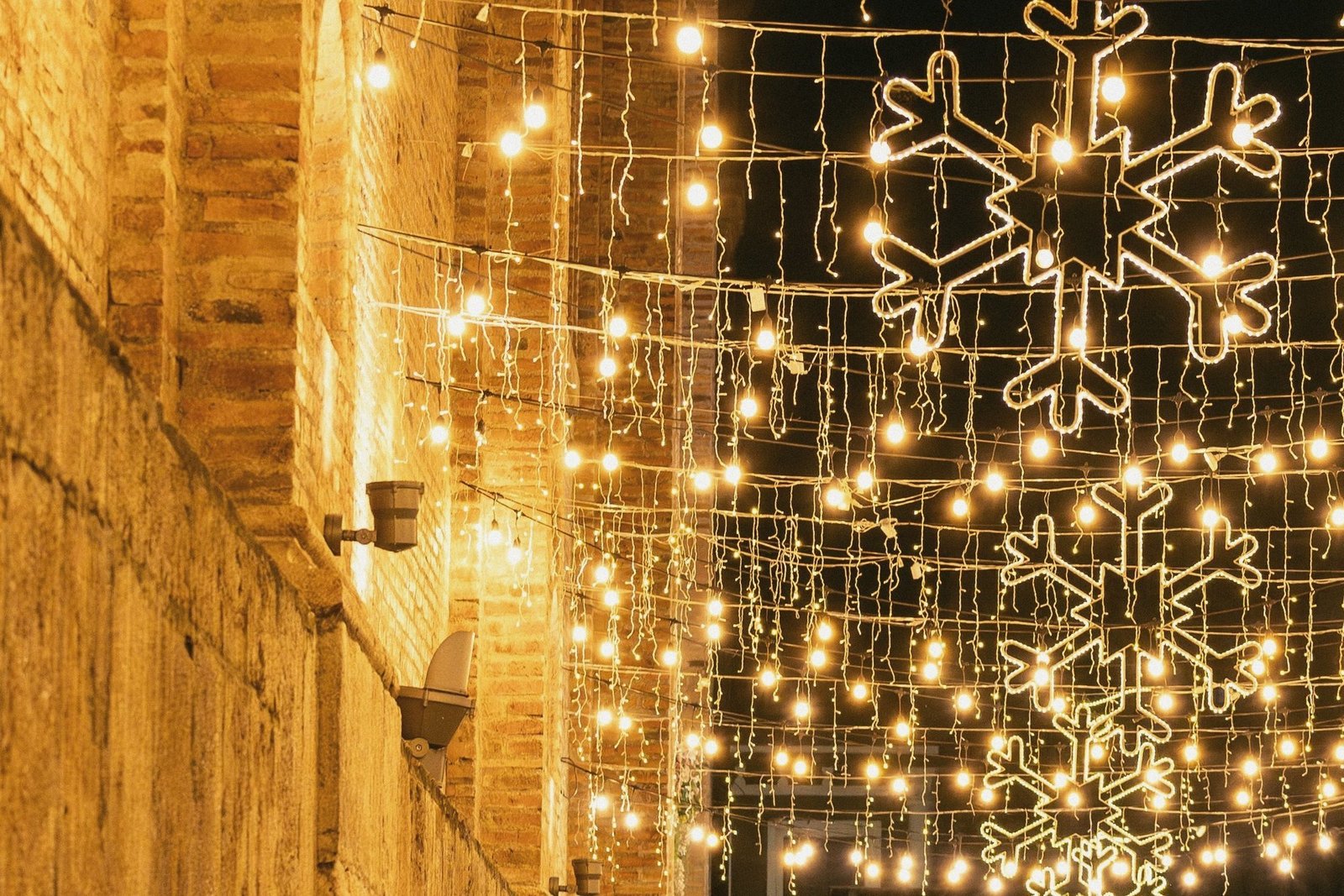
- Cover photo: PHOTO: “Festive Night Street in Cuenca, Ecuador” BY DAVID MOSQUERA / PEXELS (PEXELS LICENSE), EDITED