

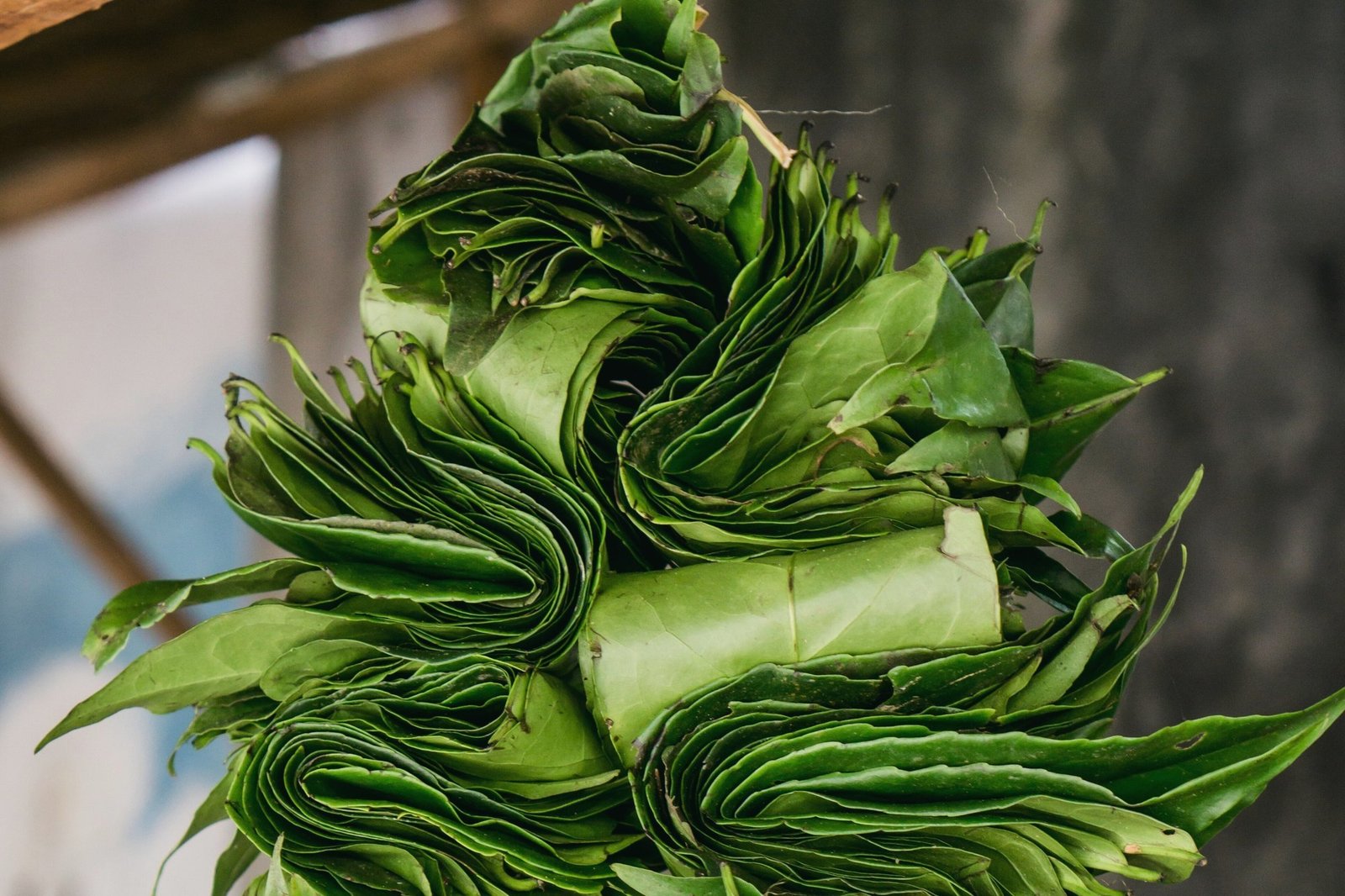
At three in the morning in a Kichwa household near Tena, someone is already up feeding the fire. A pot of leaves has been simmering. One by one the family drifts in, wrapped in blankets, and takes a bowl. Somebody tells a dream. Somebody else says what it means. By the time the birds start, the day has been planned and the youngest kids have heard a story they’ll tell their own kids.
That’s wayusa upina, the guayusa-drinking ritual of the Amazonian Kichwa. The leaf at the center of it has been showing up in Quito cafés, supermarket aisles and North American energy drinks. Before you buy the hype (or the can), here’s what guayusa actually is, what science can and can’t say about it, and how to drink it like you mean it.
Quick note for regulars: after last week’s reality check on is weed legal in Ecuador, this one is easier. Guayusa is a tea. You can buy it at the supermarket.
What guayusa is (and isn’t)
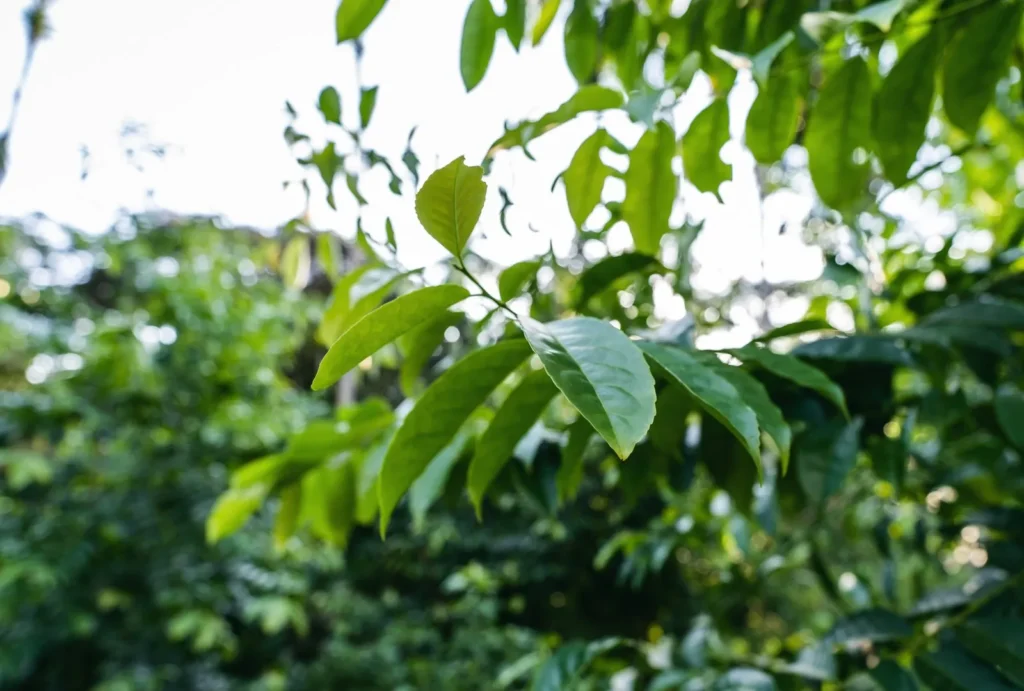
Guayusa (Ilex guayusa) is a holly, a cousin of South America’s yerba mate (Ilex paraguariensis) and of yaupon, the holly native to the southern United States. It grows mainly in the Ecuadorian Amazon, from the lowlands up to about 1,500 metres, with smaller populations in neighbouring Colombia and Peru. Families usually grow it in home gardens rather than harvesting it wild.
What sets it apart from its relatives is caffeine. A 2025 scientific review of the plant in the journal Molecules reports caffeine levels in infusions and decoctions of more than 1% and up to about 3%, with a few wild samples going much higher. It also contains small amounts of theobromine (the gentle stimulant famous from cacao) and plenty of chlorogenic acids, the same family of compounds found in coffee.
Ecuador dominates the trade. The same review puts the country at about 98% of the world guayusa market, with growers in Napo, Pastaza and Orellana producing more than US$3 million in leaf exports in 2022, much of it organic and fair trade.
The ritual: wayusa upina
Wayusa is the Kichwa word, upina refers to drinking, and the ritual is, at its simplest, a family waking up before dawn to drink together. Researchers who have documented it in communities around Tena and Archidona describe the same core elements:
- The hour. It traditionally starts around 3 a.m., long before work in the fields, fishing or hunting.
- The fire. Leaves simmer in a big pot over an open flame, and the drink is served in pilches, bowls made from gourds.
- The talk. Elders tell stories, legends and lessons. The day’s tasks are planned. People weave nets or shigras (woven bags) while they listen.
- The dreams. Dreams are shared and interpreted as signs for the day ahead. A study published in PLOS One gives an example from its interviews: dreaming of dogs can be read as a warning to watch for snakes.
It wasn’t always gentle. The same study records an old disciplinary practice, uchurina, in which elders put chili in the eyes of misbehaving children. That isn’t a detail for a wellness label, but it is part of the history. Wayusa upina was a classroom as much as a tea break.
The tradition is also older than most of the countries now drinking it. The Molecules review notes the earliest reports of the plant’s use date to around the year 500, partly thanks to a remarkable find: carefully prepared bundles of guayusa leaves inside a healer’s tomb in the Bautista Saavedra province of Bolivia, far from where the plant grows. That suggests the leaf was valuable enough to be traded across the Andes.
What the hype gets wrong
Guayusa has had an extended moment as a “superleaf,” and some claims haven’t been checked.
“It has L-theanine, so no jitters.” This is the big one. L-theanine is the amino acid in green and black tea often credited with smoothing out caffeine’s edge. Guayusa is widely sold on the claim that it contains it too. But independent reviewers, including the Australian Institute of Pharmacognosy, found no published analysis that identifies L-theanine in guayusa leaf. Until someone measures it, treat the claim as marketing.
“It’s caffeine-free” or “it’s mild.” Neither. A traditional pot simmered for hours is strong. A tea bag is gentler, but how much caffeine ends up in your cup depends on how much leaf you use and how long you brew it.
“It cures…” The plant has a long list of traditional uses, from colds to fertility. Most haven’t been tested in good human trials, and the 2025 review notes that no toxicity studies have been done in pregnant women or young children. Enjoy it as a drink, not a treatment.
What people do report, on Reddit threads and in tea forums, is a steady, focused kind of alertness that many prefer to coffee. That’s personal experience, not science, but it’s a fair description of why the leaf is catching on.
How to drink it
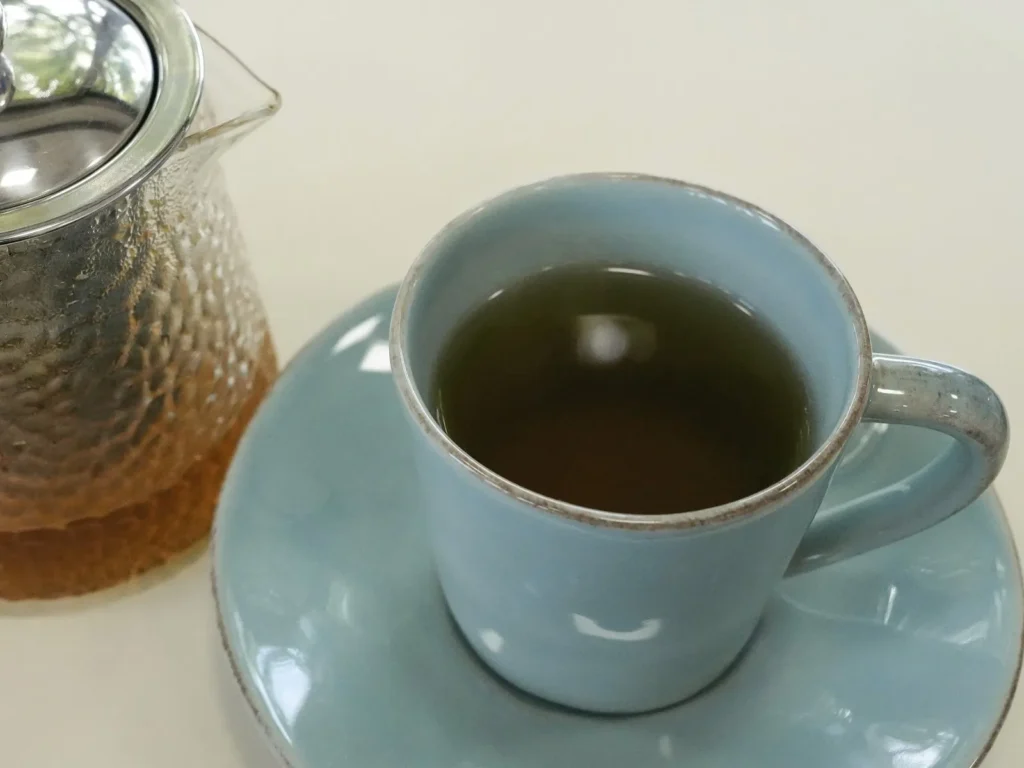
At home. Several Ecuadorian brands sell packaged guayusa; look for it in supermarkets and health-food shops. Start with one bag or a heaped teaspoon of loose leaf in hot water for five minutes. Taste it plain first: it’s earthy and slightly sweet, without much bitterness. A little honey or a squeeze of lime suits it.
The slow way. For a weekend ritual, simmer a handful of whole dried leaves in a pot for 20 to 30 minutes, then sit somewhere you can watch the light change. Turn off your phone and tell someone your dream from last night. Making a home corner that slows you down helps.
Timing. It’s caffeine. Morning, yes. After 3 p.m., probably not, unless you like staring at the ceiling.
At the source. Community tourism projects around Tena and Archidona in Napo sometimes welcome visitors to a dawn guayusa ceremony. Book through the community or a local operator that pays it directly. Show up when they say, even if that’s 4 a.m., listen more than you photograph, and remember it’s someone’s family tradition, not a show.
The long weekend angle
The November puente (Saturday 31 October to Tuesday 3 November) is one of Ecuador’s busiest travel weekends, and tourism groups expect Napo to be 70 to 90% full. If you’re heading to Tena, a dawn guayusa is the best hangover-free start to a holiday morning you’ll find. If you’re staying home, put the kettle on at sunrise and see what you dreamed.
High living isn’t about what you take. It’s about the ritual around it: who you’re sitting with, what time the light comes up, and whether you’re paying attention.
General information, not medical advice. Guayusa contains caffeine. If you’re pregnant, sensitive to caffeine or taking medication, check with a health professional before drinking it regularly.
Sources
- Noriega, P. et al. (2025). ‘Guayusa (Ilex guayusa Loes.) Ancestral Plant of Ecuador: History, Traditional Uses, Chemistry, Biological Activity, and Potential Industrial Uses’. Molecules 30(13):2837. doi:10.3390/molecules30132837: https://pmc.ncbi.nlm.nih.gov/articles/PMC12251278/
- PLOS One, ‘Socio-cultural components related to the cropping, harvesting, and consumption of guayusa (Ilex guayusa Loes) in Amazonian Kichwa communities’: https://journals.plos.org/plosone/article?id=10.1371%2Fjournal.pone.0349762
- Reascos Barahona, M. J. (2025). ‘La Wayusa Upina y su significado cultural en la comunidad Kichwa de Atacapi del cantón Tena, provincia de Napo’. ISTMAS: https://dspace.istmas.edu.ec/items/f8ff793d-6e80-4d2d-a630-b184f2e92ad2/full
- Chango-Cañaveral, P. et al. (2024). ‘Wayusa Upina, Tradition of the Kichwa Culture of the Archidona Canton, in Napo Ecuador’. RISTI E68: https://repositorio.uti.edu.ec/items/2ed5ca56-d620-432e-8917-efc8a4d434a6/full
- Universidad de las Américas (2017), thesis on caffeine content in guayusa infusions (HPLC analysis at INIAP): http://dspace.udla.edu.ec/bitstream/33000/8381/1/UDLA-EC-TIAG-2017-36.pdf
- Australian Institute of Pharmacognosy, ‘Guayusa (Ilex guayusa): caffeine, evidence and safety’ (on the unsupported L-theanine claim): https://www.australian-pharmacognosy.org/blog/guayusa-ilex-guayusa-caffeine-evidence/
- Expreso, ‘El turismo de Ecuador se alista para el feriado de noviembre entre toque de queda y cortes de luz’ (16 October 2026): https://www.expreso.ec/economia-y-negocios/turismo-ecuador-alista-feriado-noviembre-toque-queda-cortes-luz-299683.html